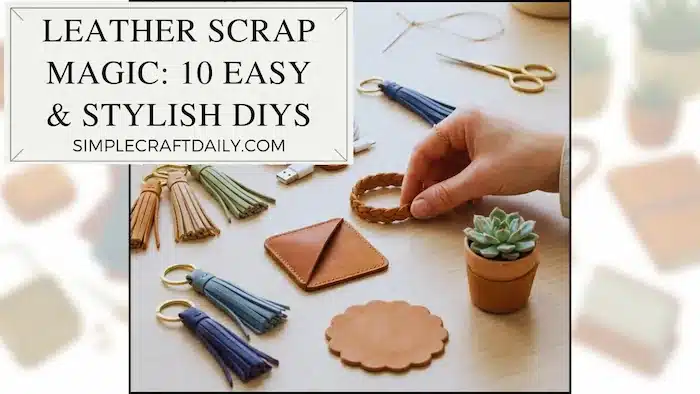

Do you need a quick way to organize your entryway table? First of all, creating a No-Sew Leather Valet Tray is the perfect solution for your home organization. Indeed, this elegant catchall provides the ideal resting place for keys and glasses. Furthermore, it allows you to achieve a high-end look without complex stitching. Consequently, even beginners can finish this project quickly. In addition, it utilizes minimal tools.
Many leathercraft projects require specialized tools and hours of hand-sewing. However, this tutorial offers a sleek minimalist alternative. Therefore, today we are making a beautiful 3D no-sew leather valet tray using a single piece of scrap leather. Specifically, we use a simple pinch-fold technique and strong contact cement. This transforms an irregular offcut into a high-end organizational piece in under 15 minutes of active crafting time.
This blog post contains affiliate links. As an Amazon Associate, I earn from qualifying purchases. The content on some of these projects may be enhanced with structural craft inspirations.
Key Facts:
- Technique: Leathercraft
- Adhesive tack time: 3 to 5 minutes
- Difficulty: Easy
Essential Supplies for a No-Sew Leather Valet Tray
| Supply | Spec / Size | Used For |
|---|---|---|
| Thick Scrap Leather (Full-Grain Pebbled) | Heavy-duty leather piece providing firm structural support for tray walls | |
| Metal Steel Ruler | Measuring and marking clean cuts | |
| Rotary Cutter | Cutting the leather cleanly | |
| Self-Healing Cutting Mat | Protecting the work surface while cutting | |
| Clear Leather Contact Cement | Bonding the no-sew tray pieces | |
| Activated Carbon Safety Mask | Light carbon mask to filter glue fumes, or work near an open window |
A few foundational materials and safety tools are used throughout multiple steps in this guide, marked with a (used throughout) tag below.
📦 Leather Base
Thick full-grain leather scrap provides the essential structural rigidity needed to hold sharp vertical walls without collapsing over time.
- Thick Scrap Leather (Full-Grain Pebbled) — Heavy-duty leather piece providing firm structural support for tray walls | See Leather Scrap on Amazon
🛠️ Cutting & Measuring Tools
Metal Steel Ruler: Provides a perfectly rigid, non-slip edge for guiding cutting blades safely and ensuring perfectly straight, square dimensions.
Rotary Cutter: Equipped with a sharp 45mm blade to glide through dense leather cleanly in a single pass, preventing the frayed edges that standard scissors leave behind.
Self-Healing Cutting Mat: Protects your workspace surface while extending the blade life of your cutting tools during heavy down-pressure slices.
- Metal Steel Ruler (used throughout) | View Steel Ruler on Amazon
- Rotary Cutter (used throughout) | Find Precision Cutter Options on Amazon
- Self-Healing Cutting Mat (used throughout) | See Crafting Mat Options on Amazon
- Heavy-Duty Utility Knife (or X-Acto Knife) (used throughout) — Alternative precision cutting blade for patient, multi-pass leather slices | [Check Utility Knife Options on Amazon]
🧪 Adhesives & Clamps
High-strength chemical adhesives and clamping tools establish a permanent structural bond across all four pinch-folded corners.
Clear Leather Contact Cement: A high-strength, flexible adhesive formulated specifically to create a permanent chemical bond between the fibrous leather flesh sides.
Thin Wooden Sticks: Allows for highly precise, targeted glue application inside narrow corner creases without smearing adhesive onto the visible faces of the tray.
Heavy-Duty Binder Clips: Exerts continuous, even clamping pressure on the glued corner tabs during the critical 12-to-24-hour curing phase.
- Clear Leather Contact Cement (used throughout) | Check Glue Availability on Amazon
- Thin Wooden Sticks | Check Craft Sticks on Amazon
- Heavy-Duty Binder Clips (used throughout) | See Binder Clips on Amazon
- Activated Carbon Safety Mask (or Well-Ventilated Space)** *(used throughout)* — Light carbon mask to filter glue fumes, or simply work near an open window | [View Safety Mask Options on Amazon]
Core Leathercraft Techniques Masterclass
Before diving into the step-by-step assembly, mastering these two foundational leatherworking skills will ensure a flawless, professional finish.
1. Precision Rotary Cutting
- Place your leather grain-side up on a self-healing cutting mat.
- Align your metal steel ruler along your cutting mark.
- Press down firmly with your non-dominant hand to prevent the ruler from sliding.
To achieve smooth, straight edges without fraying the leather, you must always use a sharp rotary blade. First, place your leather grain-side up on a self-healing cutting mat. Next, align your metal steel ruler along your cutting mark. Press down firmly with your non-dominant hand to prevent the ruler from sliding. Afterward, glide the rotary cutter along the edge of the ruler in a single, continuous motion. Consequently, this prevents jagged edge segments or accidental slips.
2. Contact Cement Activation
Contact cement works differently than standard craft glue because it requires open-air activation time before joining materials. First, use a thin wooden stick to apply a micro-layer of cement to both surfaces that need to connect. Next, allow the adhesive to sit undisturbed for 3 to 5 minutes until it becomes tacky to the touch and changes from glossy to matte. Therefore, when the two sides are finally pressed together, they form an instant, permanent structural bond under pressure.
Step-by-Step No-Sew Leather Valet Tray Instructions
Step 1: Prep and Cut Your Leather Geometry
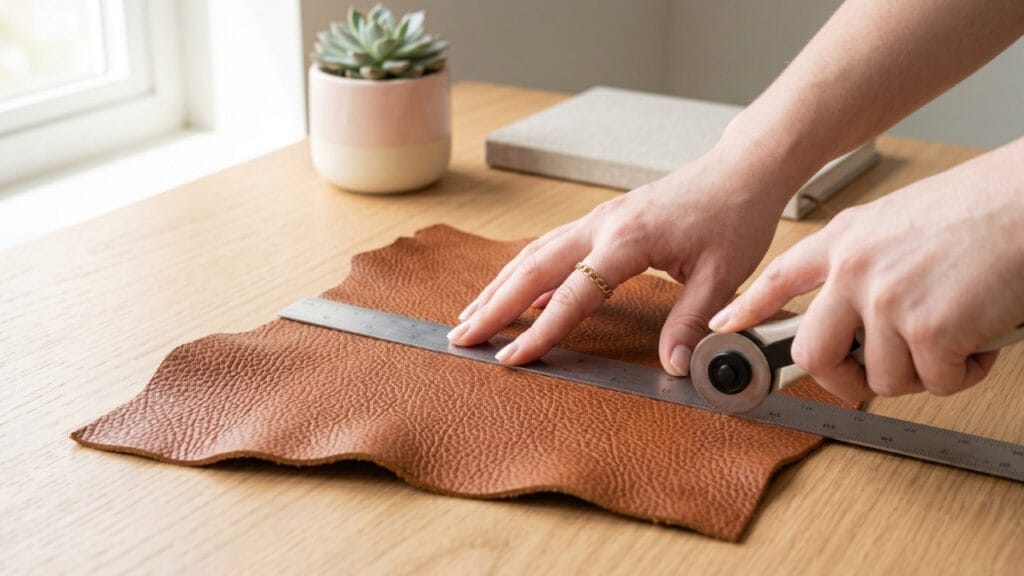
To begin, the beauty of this project is its scrap-busting nature. Start with an irregular piece of thick leather. Lay it flat on your cutting mat with the smooth grain side facing up. Next, firmly press down with your metal steel ruler. Slice a perfect square out of the scrap using your rotary cutter (see Technique 1: Precision Rotary Cutting above).
Inline Safety Warning: Always keep your fingers well behind the edge of the steel ruler and roll the rotary cutter away from your body to avoid severe cuts. Ensure the safety blade guard is engaged whenever the tool is not touching the mat.
The size of your no-sew leather valet tray is up to you. However, an 8×8 inch or 10×10 inch square works great. Ensure your cuts are clean and straight because these raw edges will remain highly visible.
Pro-Tip: If you do not have a rotary cutter on hand, you can successfully substitute it with a heavy-duty utility knife or an X-Acto knife. Just make sure to make multiple shallow, patient passes along the steel ruler rather than forcing the blade through the thick leather all at once.
Step 2: Apply the Contact Adhesive Precisely
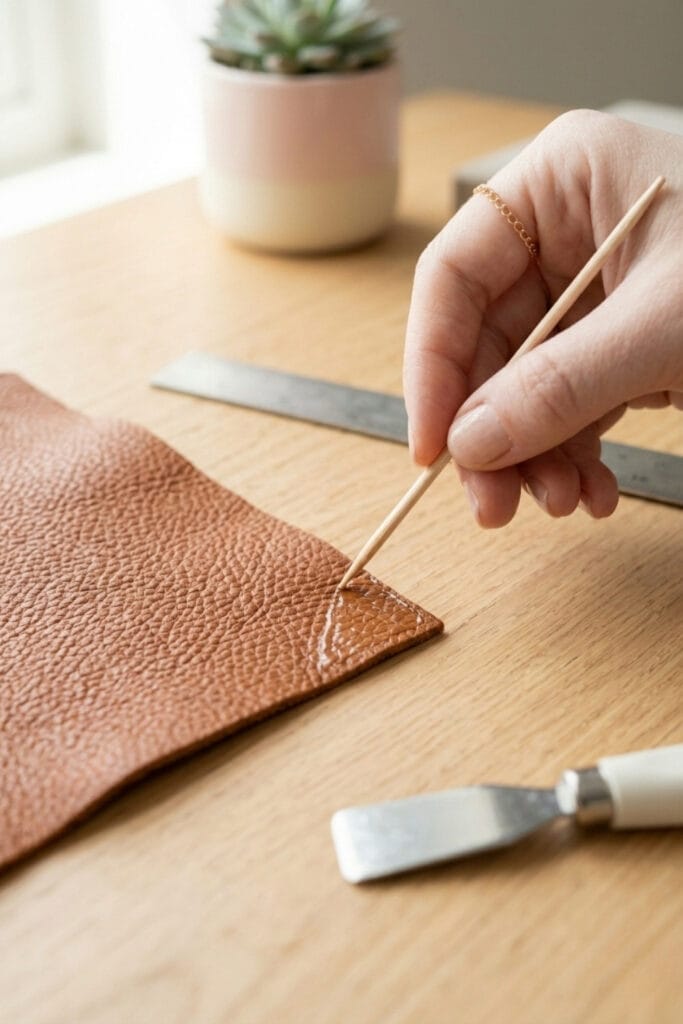
This is the most critical step for a successful no-sew leather valet tray. Consequently, we must be precise. Take a corner and gently pinch it outwards. This helps visualize where the two inner flesh sides meet. Then, use your thin wooden stick. Apply a thin, even layer of clear leather contact cement (see Technique 2: Contact Cement Activation above).
Inline Safety Warning: Work exclusively in a well-ventilated room, near an open window, or wear a safety mask to prevent inhaling strong chemical adhesive fumes.
Keep this strictly inside the V-shaped crease. Importantly, do not get any glue on the flat base. The adhesive should only coat the inner suede-like walls of the small “ear” or tab you are forming. Afterward, let the glue sit open for 4 minutes until it becomes completely tacky.
Pro-Tip: Keep a damp cloth or cotton swab nearby. If any contact cement accidentally smears onto the smooth grain side or the flat base of the tray, rub it away immediately before it activates and cures.
Step 3: Pinch and Clamp the Corners of Your No-Sew Leather Valet Tray
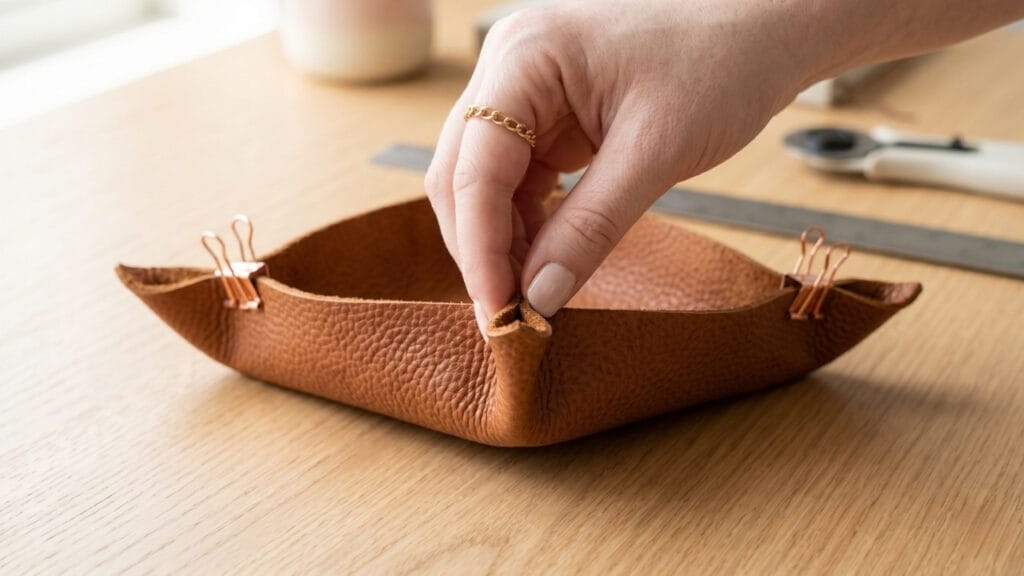
Once your adhesive is perfectly tacky, firmly pinch the glued inner sides together. The leather will buckle slightly. As a result, this raises the straight edges to form the walls of your tray. Thick leather naturally wants to lay flat. Because of this, the adhesive needs time to cure under continuous pressure. Therefore, take your binder clips and clamp the pinched fold securely. Ensure the clip sits directly over the glued seam. Afterward, repeat these application and clamping steps for all four corners.
Pro-Tip: Heavy binder clips can exert deep pressure that might leave a permanent indentation on premium pebbled leather. To prevent this, cut small rectangular pieces from an old cardboard box and slide them under the metal jaws of the binder clips to protect the leather surfaces while clamping.
Step 4: Let Cure and Style Your No-Sew Leather Valet Tray
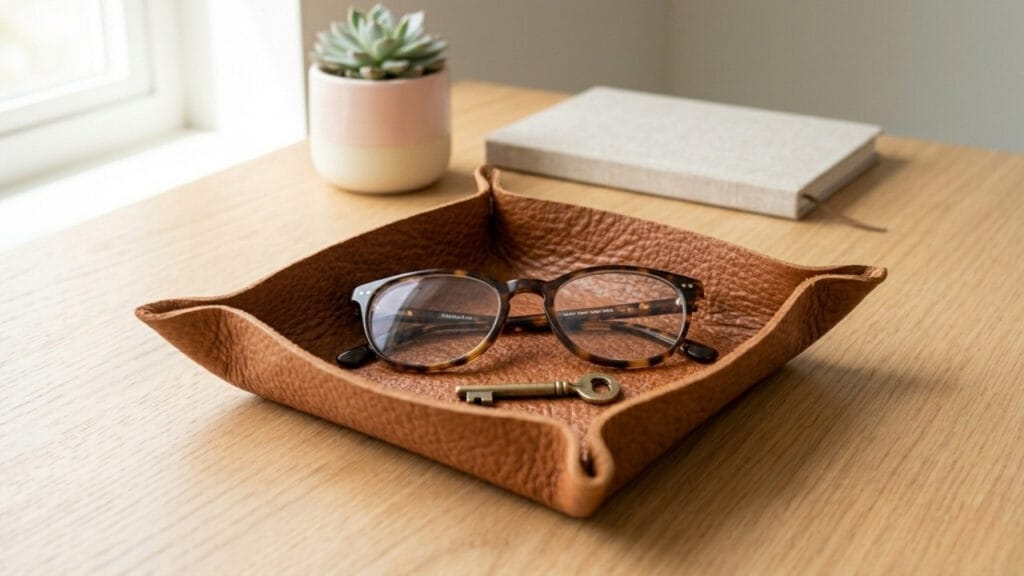
Finally, leave the tray clamped for the full curing time. Usually, leaving it undisturbed for 12 to 24 hours yields the most durable results. Once fully cured, carefully remove the binder clips. The structural tension of those four glued corners is incredibly strong. It will now independently hold the tray in its elegant 3D form. Consequently, place your finished no-sew leather valet tray on your entryway table or desk. It is instantly ready to beautifully hold your everyday carry items.
Care, Maintenance & Styling
To keep your handmade leather valet tray looking pristine, clear it out once a week and wipe it down with a dry microfiber cloth to remove dust and pocket lint. Because genuine full-grain leather is naturally porous, keep the tray away from standing water and damp environments to avoid structural warping or stains. Additionally, display your tray away from direct, harsh sunlight to prevent the pebbled texture from prematurely fading over time.
Conclusion
Creating high-end home decor doesn’t require complicated techniques or hours of hand-sewing. In fact, this no-sew leather valet tray proves a great point. With the right materials and geometry, you can quickly create something beautiful and functional.
Furthermore, if you enjoyed the simplicity of our previous Beginner Polymer Clay Guides, you will definitely love the upgraded minimalist aesthetic of this leather craft! If you try this tutorial out, let us know in the comments below. Happy crafting!
Quick Reference: All Supplies at a Glance
Ready to craft your minimalist catchall? Here’s every tool and material from this guide in one quick list before checkout:
LEATHER BASE
- — Thick Scrap Leather (Full-Grain Pebbled) | See Leather Scrap on Amazon
CUTTING & MEASURING TOOLS
- — Metal Steel Ruler | View Steel Ruler on Amazon
- — Rotary Cutter | Find Precision Cutter Options on Amazon
- — Self-Healing Cutting Mat | See Crafting Mat Options on Amazon
- — Heavy-Duty Utility Knife (or X-Acto Knife) | [Check Utility Knife Options on Amazon]
ADHESIVES & CLAMPS
- — Clear Leather Contact Cement | Check Glue Availability on Amazon
- — Thin Wooden Sticks | Check Craft Sticks on Amazon
- — Heavy-Duty Binder Clips | See Binder Clips on Amazon
- — Activated Carbon Safety Mask (or Well-Ventilated Space) | [View Safety Mask Options on Amazon]
Important Crafting Safety Notes:
Always handle rotary cutters and utility knives with extreme caution, ensuring the safety blade guard is fully engaged whenever the tool is not actively touching the cutting mat. Work exclusively in well-ventilated areas, outdoors, or with a safety mask when applying clear leather contact cement to avoid inhaling concentrated chemical fumes. Remember that heavy-duty binder clips exert high pressure; keep your fingers clear of the clamping mechanism during application. Keep all sharp blades, toxic chemical adhesives, and small hardware components completely out of reach of curious pets and children.