
Hosting a dinner party is always exciting. In fact, setting a beautiful table makes the meal feel truly special. You do not need to buy expensive new tableware. Instead, creating DIY stamped napkins is a perfect way to elevate your dining experience. Plus, these custom linens bring a warm artisan touch to your home.
Affiliate Disclosure: Affiliate Disclosure: This post contains affiliate links. As an Amazon Associate, I earn from qualifying purchases. If you buy through these links, I may earn a commission at no additional cost to you.
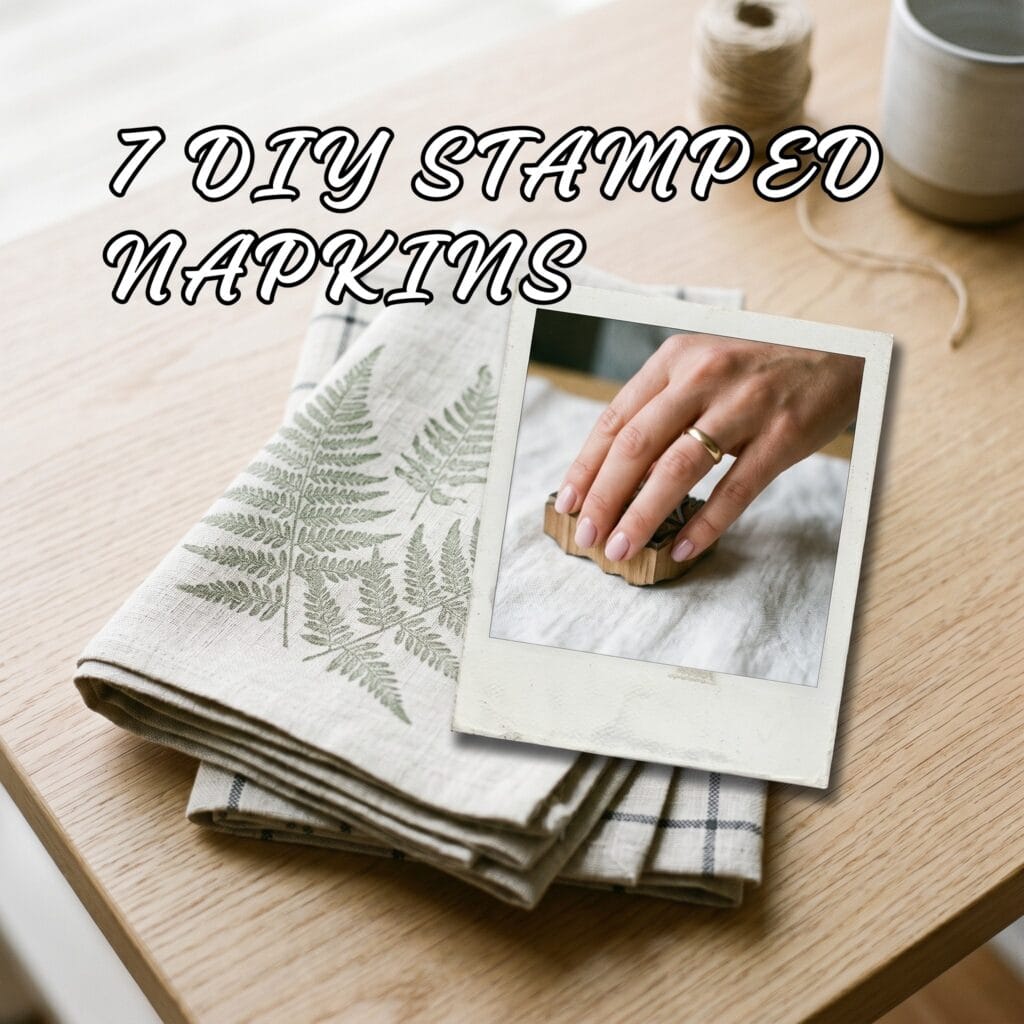
Naturally, handmade details make your guests feel welcome. For instance, a simple linen cloth instantly looks like a boutique item with a little ink. Luckily, you only need a few supplies to start. So, if you love hosting, you will completely enjoy this simple weekend craft.
Essential Materials & Tools
✨ Consumable Raw Materials
- Prewashed White Cotton Dinner Napkins — Smooth natural-fiber napkins provide an absorbent, washable surface for crisp stamped designs. | Check Price on Amazon
- Natural Linen Cloth Napkins — Textured linen gives custom botanical, stripe, and geometric prints an elevated artisan appearance. | See Price on Amazon
- Heat-Set Fabric Block Printing Ink Set — Opaque, washable ink formulated for fabric creates durable designs that can be heat-set with an iron or press. | Check Heat-Set Fabric Block Printing Ink Set on Amazon
- Earth-Tone Fabric Paint Set — Terracotta, olive, mustard, charcoal, and beige shades support every featured modern, rustic, and botanical pattern. | See Earth-Tone Fabric Paint Set on Amazon
- Carvable Rubber Stamp Blocks — Soft carving blocks let makers create custom arch, stripe, grid, dot, and abstract geometric stamp shapes. | View Carvable Rubber Stamp Blocks on Amazon
🧰 Core Crafting Tools & Equipment
- Soft Rubber Botanical Stamp Set — Reusable olive branch and fern motifs make delicate nature-inspired napkin designs quick and consistent. | Find Soft Rubber Botanical Stamp Set on Amazon
- Wooden Geometric Block Stamp Set — Reusable arches, circles, squares, and rectangles simplify minimalist, abstract, stripe, and grid layouts. | Check Latest Price on Amazon
- Soft Foam Brayer Rollers — A smooth brayer spreads an even, thin layer of ink across stamps for clean impressions without blobs. | View on Amazon
- Ink Palette Tray Set — Flat reusable trays provide a controlled surface for rolling fabric ink onto stamps. | Check Price on Amazon
- Fabric Stamp Carving Tool Set — Interchangeable carving blades help makers cut precise lines, leaves, arches, and custom border designs. | See Price on Amazon
💎 Hardware, Fasteners & Finishing
- Heat-Set Fabric Ink Fixative — A compatible fabric-ink fixative improves wash durability and helps preserve the finished printed surface. | Check Heat-Set Fabric Ink Fixative on Amazon
- Heat-Resistant Pressing Sheet — Protects both the iron and the stamped napkin while heat-setting ink without transferring color. | See Heat-Resistant Pressing Sheet on Amazon
- Low-Tack Painter’s Tape — Creates clean masked stripe borders, aligned grids, and protected blank areas on custom linens. | View Low-Tack Painter’s Tape on Amazon
📦 All-in-One Starter Kits
- Fabric Block Printing Starter Kit — An all-in-one beginner kit bundles fabric inks, a brayer, carving supplies, stamps, and printing accessories for first projects. | Find Fabric Block Printing Starter Kit on Amazon
⚡ Studio Tools & Workshop Equipment
- Professional Heat Press Machine — A dedicated press applies consistent heat and pressure across the entire napkin for dependable, washable ink curing. | Check Latest Price on Amazon
- Daylight LED Magnifying Desk Lamp — Bright adjustable lighting and magnification improve precision when carving fine fern veins, olive leaves, and monoline grid stamps. | View on Amazon
- Rolling Craft Storage Cart — A durable mobile workstation keeps inks, brayers, stamps, carving tools, and clean linens organized between projects. | Check Price on Amazon
Before you start, you must gather your supplies. Of course, having the right materials ensures your DIY stamped napkins will survive many dinner parties.
- pick your fabric: 100% natural linen or smooth cotton cloth napkins work best.
- Next, choose your ink: High-quality fabric block printing ink is ideal. Alternatively, you can use fabric paint.
- Also, get your stamps: Carved wooden blocks or soft rubber stamps are great.
- Finally, grab the essentials: A soft foam brayer (roller) to apply ink, a palette, and scrap cardboard.
How to Make Custom Linens Step-by-Step
Making DIY stamped napkins is a very relaxing project. Basically, just follow these simple steps for flawless results:
- To begin, wash and iron your plain napkins. By doing this, you remove chemicals and create a smooth canvas.
- place scrap cardboard under the fabric. Consequently, this prevents wet ink from bleeding onto your table.
- Next, roll fabric ink onto your stamp using the brayer. Make sure the ink coverage is completely even.
- Now, press the stamp firmly onto the fabric. Then, lift it straight up carefully.
- Afterward, let the ink dry completely overnight. Lastly, heat-set the design with a hot iron so it becomes washable.
Pro-Tip: Always practice your design on a paper towel first. Specifically, this helps you check the ink flow and pressure before stamping your final dinner napkins.
7 Creative Ideas for DIY Stamped Napkins
1. Modern Minimalist Arches: DIY Stamped Napkins
Supplies Needed: Prewashed White Cotton Dinner Napkins, Natural Linen Cloth Napkins, Heat-Set Fabric Block Printing Ink Set, Soft Rubber Botanical Stamp Set, Wooden Geometric Block Stamp Set, Soft Foam Brayer Rollers, Ink Palette Tray Set, Heat-Resistant Pressing Sheet
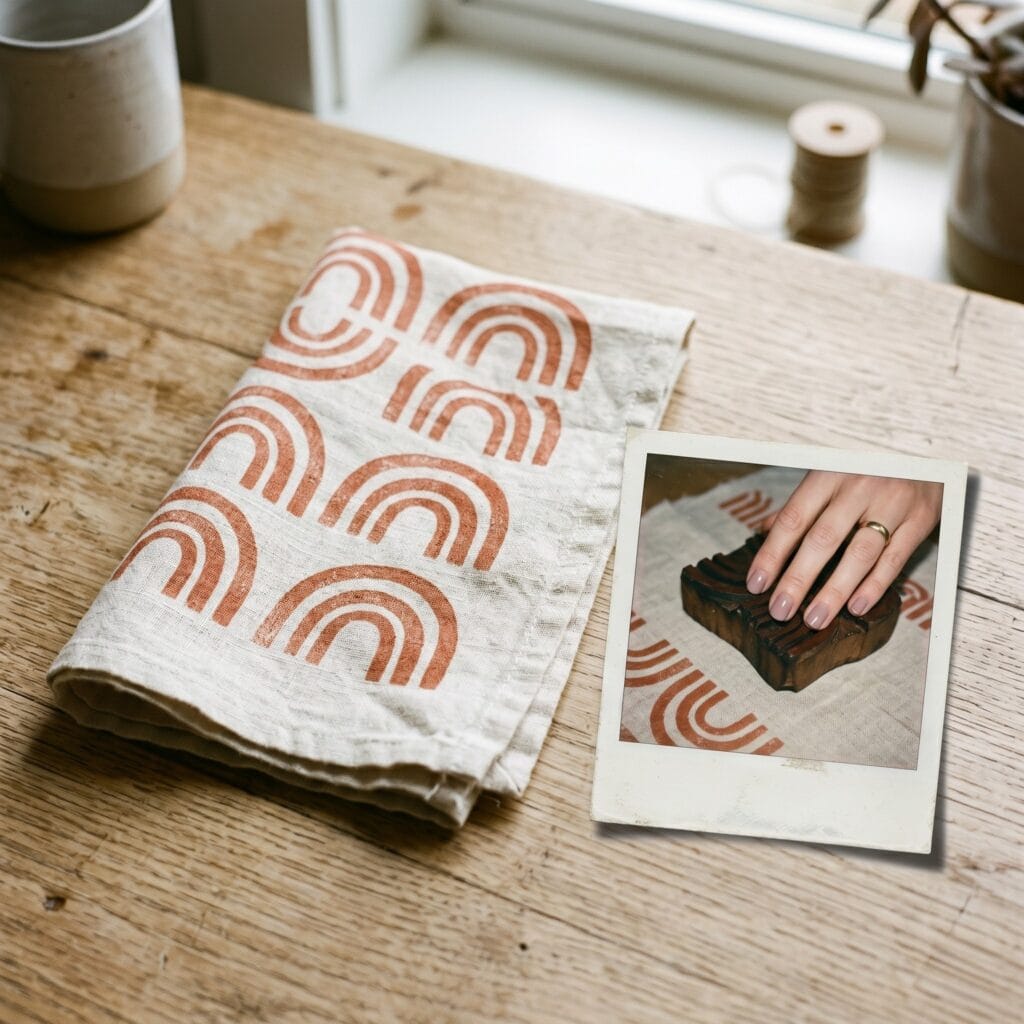
Geometric shapes are very trendy right now. For example, stamping simple half-arches creates a modern boho look. Simply use a warm terracotta ink. As a result, you get a chic, desert-inspired tablescape.
2. Delicate Olive Branches
Supplies Needed: Low-Tack Painter’s Tape, Soft Foam Brayer Rollers, Ink Palette Tray Set, Heat-Set Fabric Ink Fixative, Professional Heat Press Machine
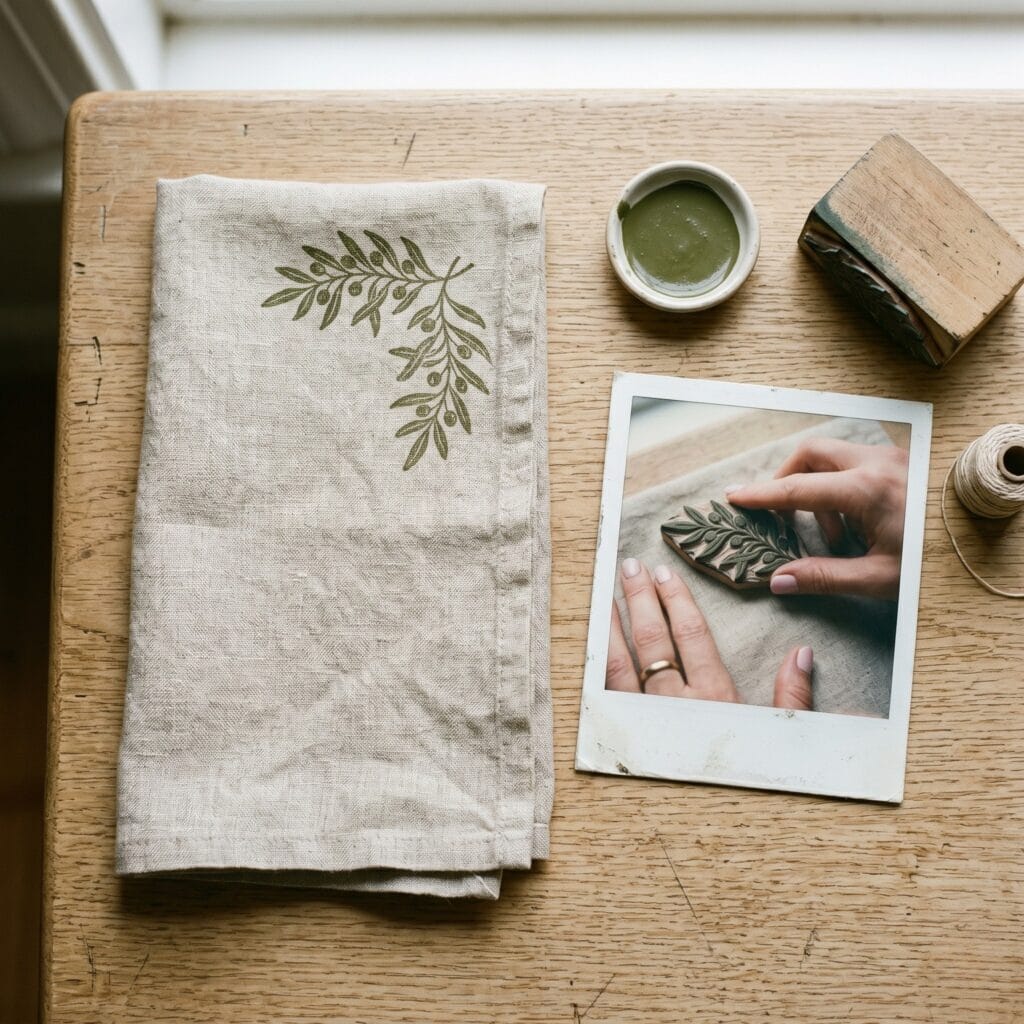
Nature-inspired designs always work well for dining. Simply stamp a green olive branch in the corner of your DIY stamped napkins. Also, this organic look pairs perfectly with the earthy textures in our Hand Painted Terracotta Pots: 10 Easy Ideas You’ll Love centerpiece guide.
3. Abstract Geo Blocks
Supplies Needed: Earth-Tone Fabric Paint Set, Carvable Rubber Stamp Blocks, Fabric Stamp Carving Tool Set, Wooden Geometric Block Stamp Set, Soft Rubber Botanical Stamp Set
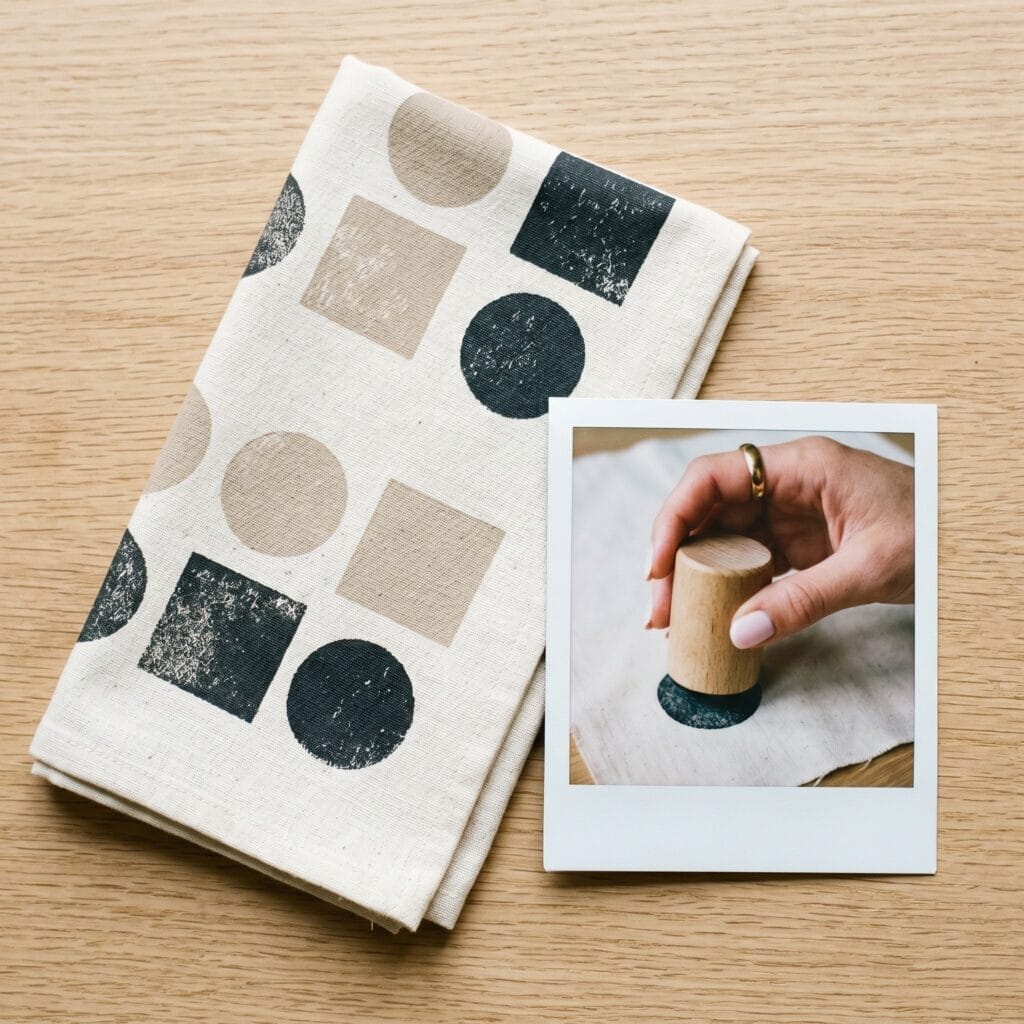
You can easily play with asymmetry. In this case, use solid squares and circles in neutral tones like beige and charcoal. Consequently, this creates a highly contemporary, artistic dining setup.
4. Rustic French Stripes
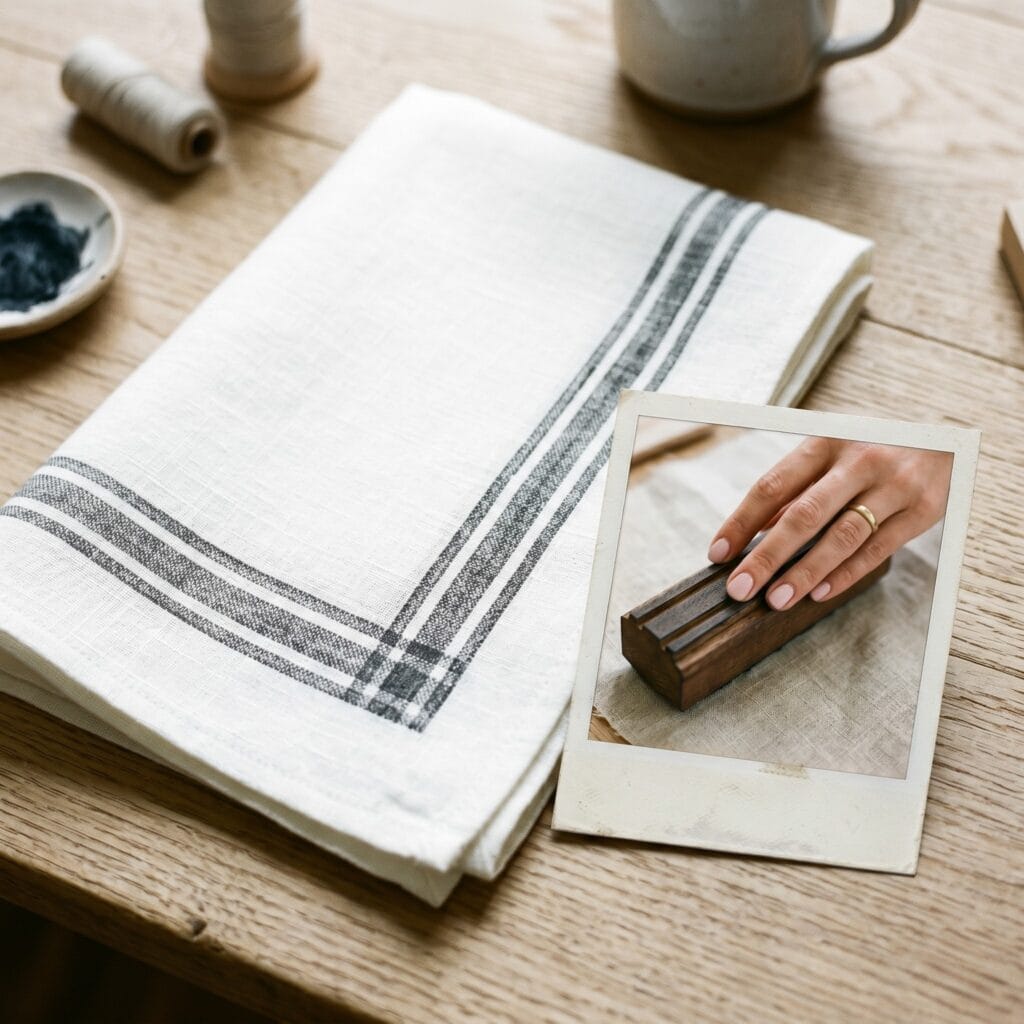
Striped edges are an absolute classic. First, grab a long rectangular stamp. Next, press it along the borders of a white linen cloth. Clearly, this adds a sophisticated vintage farmhouse vibe.
5. Fall Botanical Ferns
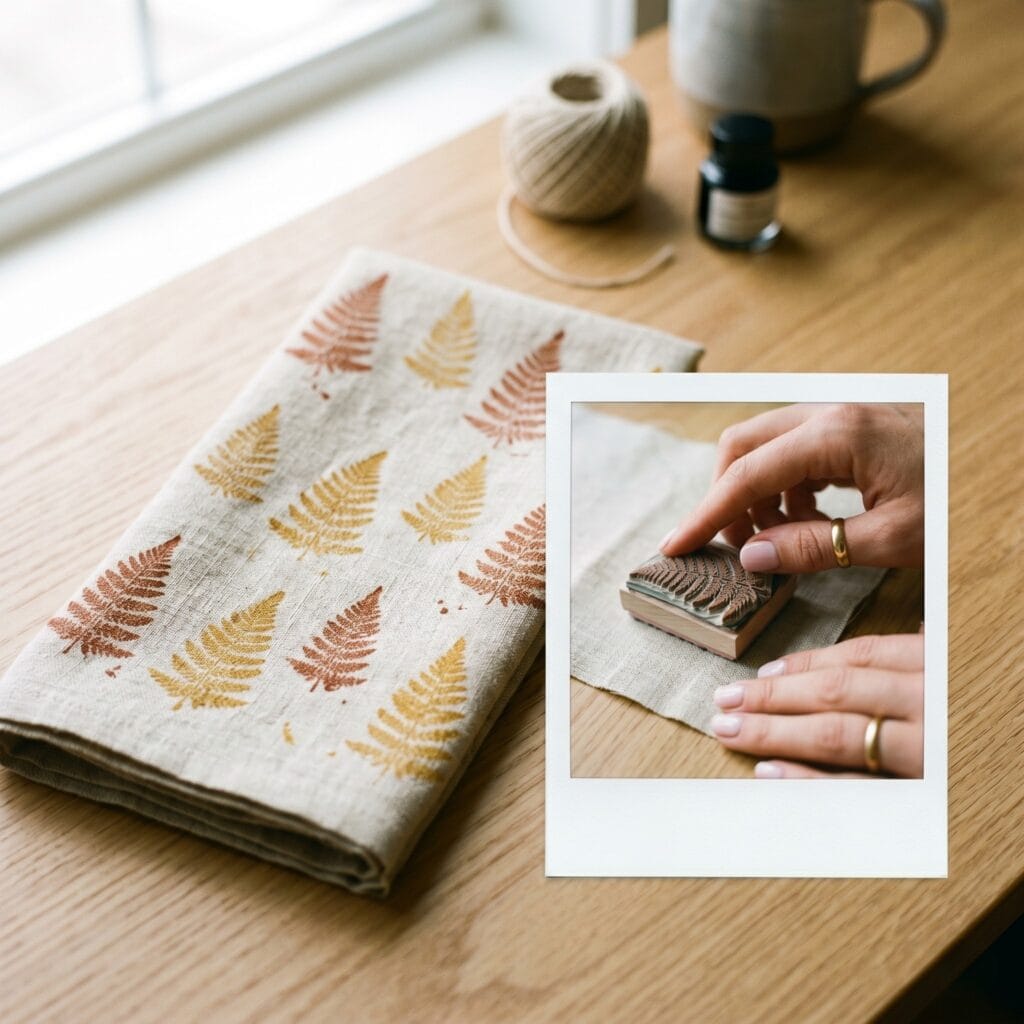
Seasonal decor is always a huge hit. Because of this, using warm rust and mustard inks to stamp tiny fern leaves is a great idea. Plus, you can check our Botanical Plaster Casting: 10 Stunning DIY Studio Secrets tutorial for even more nature inspiration for your home.
6. Scandi Monoline Grids
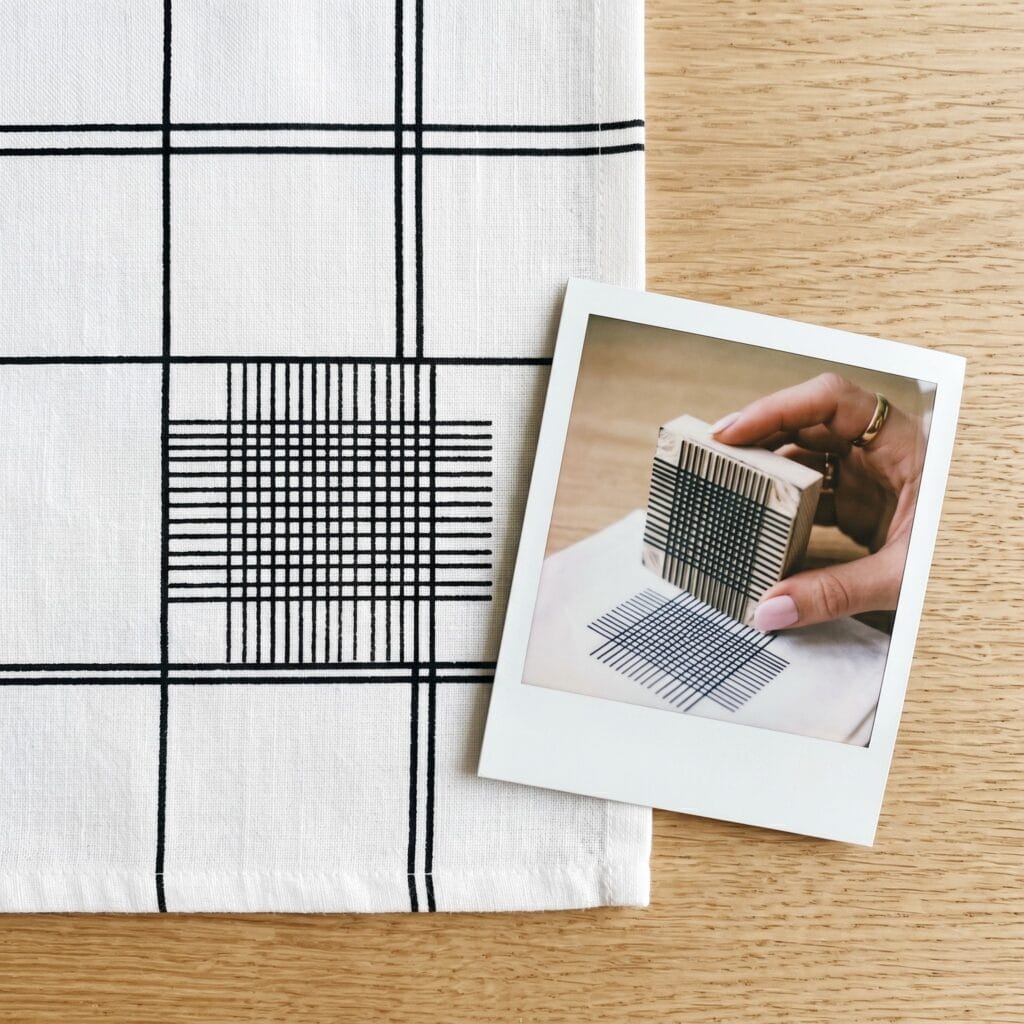
Clean lines look very elegant. Actually, stamping a simple, thin grid pattern is a great choice for minimalist dining. Therefore, keep the ink strictly black for high contrast.
7. Whimsical Polka Dots
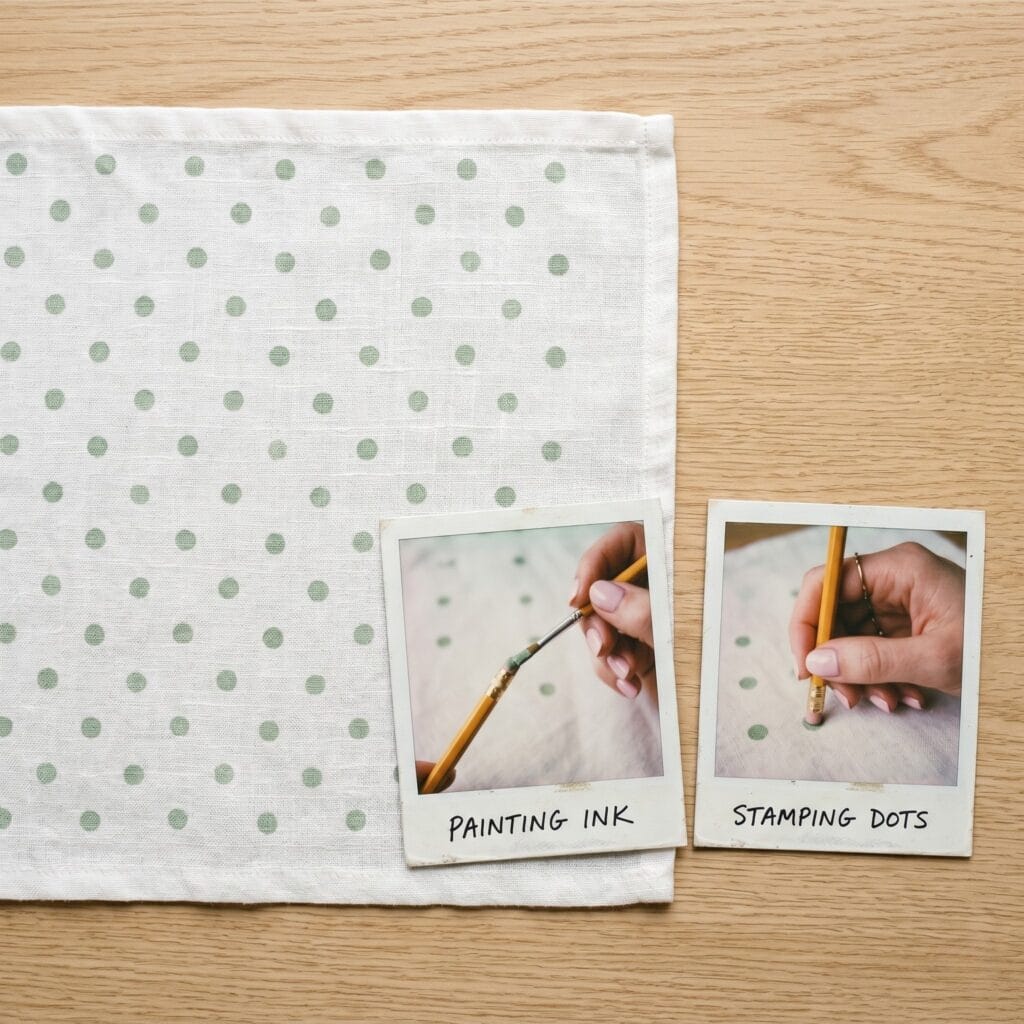
Polka dots are playful and extremely easy. In fact, you can just use the round eraser end of a pencil as your stamp. Thus, you create a fun, casual design perfect for outdoor summer brunches.
Important Crafting Safety Note:
When using sharp carving tools to make custom blocks for your DIY stamped napkins, always cut away from your body. Because linoleum carving blades are extremely sharp, one small slip can cause a deep cut. Therefore, keep your non-dominant hand safely behind the blade path at all times. Additionally, ensure good ventilation in your room when using fabric mediums or heat-setting your linens.
Quick Reference: All Supplies at a Glance
For your convenience, here is a quick summary of all materials and tools used in this tutorial:
✨ Consumable Raw Materials
- Prewashed White Cotton Dinner Napkins | Check Price on Amazon
- Natural Linen Cloth Napkins | See Price on Amazon
- Heat-Set Fabric Block Printing Ink Set | Check Heat-Set Fabric Block Printing Ink Set on Amazon
- Earth-Tone Fabric Paint Set | See Earth-Tone Fabric Paint Set on Amazon
- Carvable Rubber Stamp Blocks | View Carvable Rubber Stamp Blocks on Amazon
🧰 Core Crafting Tools & Equipment
- Soft Rubber Botanical Stamp Set | Find Soft Rubber Botanical Stamp Set on Amazon
- Wooden Geometric Block Stamp Set | Check Latest Price on Amazon
- Soft Foam Brayer Rollers | View on Amazon
- Ink Palette Tray Set | Check Price on Amazon
- Fabric Stamp Carving Tool Set | See Price on Amazon
💎 Hardware, Fasteners & Finishing
- Heat-Set Fabric Ink Fixative | Check Heat-Set Fabric Ink Fixative on Amazon
- Heat-Resistant Pressing Sheet | See Heat-Resistant Pressing Sheet on Amazon
- Low-Tack Painter’s Tape | View Low-Tack Painter’s Tape on Amazon
📦 All-in-One Starter Kits
- Fabric Block Printing Starter Kit | Find Fabric Block Printing Starter Kit on Amazon
⚡ Studio Tools & Workshop Equipment
- Professional Heat Press Machine | Check Latest Price on Amazon
- Daylight LED Magnifying Desk Lamp | View on Amazon
- Rolling Craft Storage Cart | Check Price on Amazon
Important Crafting Safety Notes
Crafting is a rewarding creative activity, but maintaining a safe workshop environment is essential for yourself, your family, and your pets. Please review these vital safety precautions before starting:
• Personal Protective Equipment (PPE) & Safe Handling: Always wear safety glasses or protective eyewear when cutting metal wire, clipping jump rings, trimming hard findings, or using power tools to prevent flying shards. Use heat-resistant work mats and exercise caution around high-temperature glue guns, irons, or heating tools to avoid burns. Wear disposable nitrile gloves and a particle dust mask when sanding wood or working with clays, resins, and solvent-based sealants to protect your skin and lungs.
• Room Ventilation & Fume Safety: Always craft in a well-ventilated space with open windows, cross-ventilation, or active exhaust whenever using solvent-based adhesives, instant bonders, aerosol sprays, epoxy resins, or heat-curing materials. Never inhale chemical fumes directly, and allow finished pieces to off-gas and cure completely in an airy area away from everyday living spaces.
• Child & Pet Safety (Choking & Swallowing Prevention): Small craft components—including safety eyes, split rings, clasps, jump rings, beads, bells, small magnets, unbaked clay scraps, and loose polyester fiberfill—present severe choking, intestinal obstruction, and ingestion hazards for babies, toddlers, and pets. Keep all unattached hardware, yarn cutoffs, and stuffing strictly out of reach. For handmade gifts intended for infants or young children, omit plastic washer eyes and detachable findings entirely in favor of securely stitched, double-knotted embroidered details.
• Sharp Tool Storage & Clean Work Area: Store sharp tools—such as rotary cutters, craft knives, bent-tip yarn needles, snips, scissors, and jewelry pliers—in secure, latching cases or high cabinets immediately after use. Thoroughly inspect, sweep, or vacuum your craft area and floor after finishing to ensure no dropped needles, pins, wire clippings, or small findings remain where curious pets or bare feet could step on or swallow them.
• Certified, Quality & Non-Toxic Supplies: Always choose verified non-toxic craft supplies (such as ACMI AP-certified paints and adhesives, lead-free and nickel-free jewelry findings, and skin-safe materials). Follow manufacturer label guidelines for curing durations, safe operating temperatures, and proper product disposal. Never use food preparation utensils or kitchen cookware for craft chemicals.
For more detailed guidance on safe crafting practices, liability disclosures, and website usage, please review our Terms and Conditions.