
Every sewist knows the familiar struggle of a constantly growing pile of leftover textiles. Instead of throwing these beautiful offcuts away, you can transform them into incredibly useful tools for your workspace. Tackling easy fabric scrap projects is a fantastic way to practice sustainable crafting while keeping your creative area perfectly organized. Furthermore, these tiny handmade tools will make your future sewing sessions much more efficient.
Affiliate Disclosure: This post contains affiliate links. As an Amazon Associate, I earn from qualifying purchases. If you buy through these links, I may earn a commission at no additional cost to you.
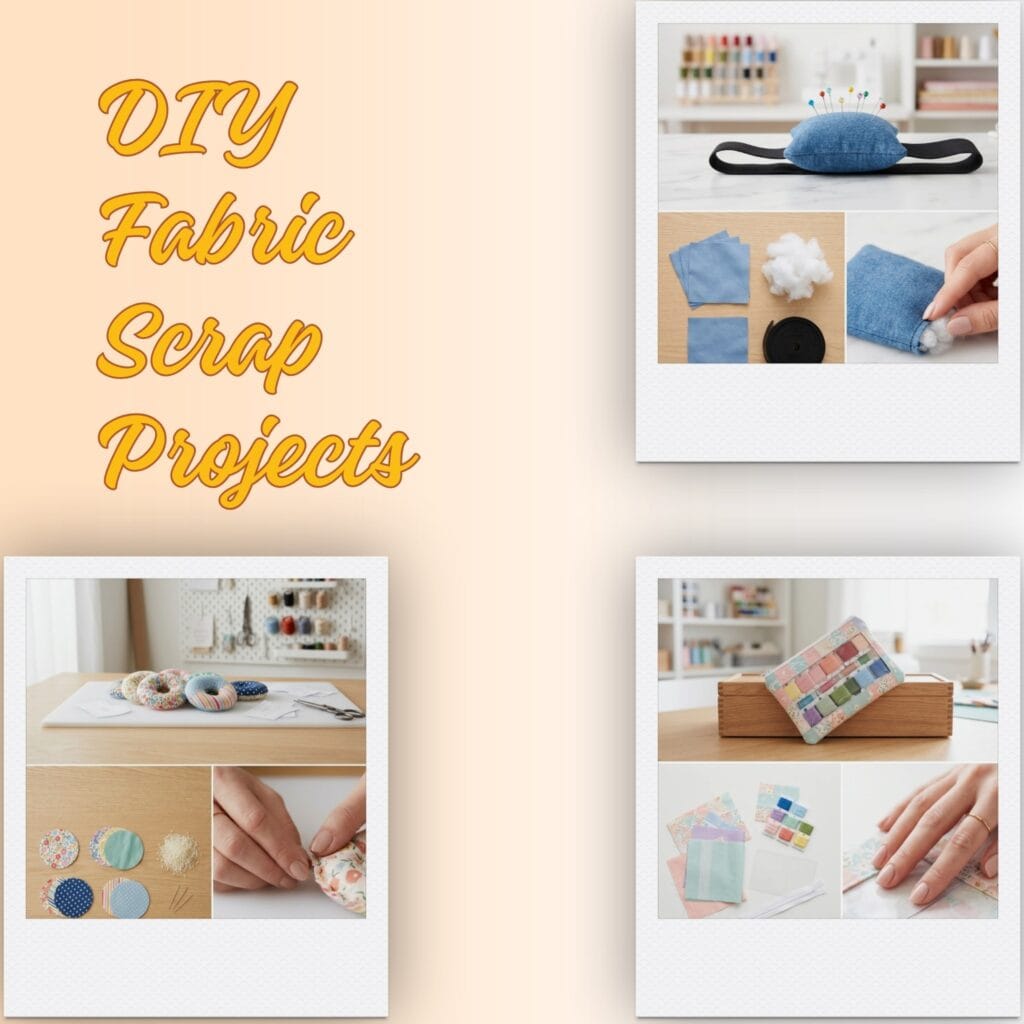
If you enjoyed organizing your daily essentials with our recent upcycled denim wallets, you will certainly love organizing your craft desk next. Indeed, creating your own bespoke sewing equipment adds a wonderful personal touch to your studio. Therefore, diving into easy fabric scrap projects is the perfect weekend activity.
Here are 10 brilliant easy fabric scrap projects you can sew to upgrade your sewing room today.
Top 10 Easy Fabric Scrap Projects for Your Workspace
Essential Materials & Tools
✨ Consumable Raw Materials
- Assorted Quilting Cotton Fabric Scraps — Coordinated cotton offcuts are versatile for patchwork, small pouches, covers, cushions, and spool accessories. | Check Price on Amazon
- Natural White Rice — An affordable, compact filling that gives soft pattern weights useful heft. | See Price on Amazon
- Steel Flat Washers — A moisture-free, long-lasting alternative to rice for adding weight to doughnut pattern weights. | Check Steel Flat Washers on Amazon
- Wool Blend Felt Sheets — Dense felt holds hand-sewing needles securely while staying gentle on their points. | See Wool Blend Felt Sheets on Amazon
- Narrow Satin Ribbon — Soft, narrow ribbon creates an easy tie closure for a handmade needle book. | View Narrow Satin Ribbon on Amazon
- Polyester Fiberfill Stuffing — Resilient stuffing gives wrist and jar pincushions a plump shape that accepts pins easily. | Find Polyester Fiberfill Stuffing on Amazon
- Wide Non-Roll Elastic — Stable elastic makes a comfortable wristband that resists twisting while sewing. | Check Latest Price on Amazon
- Cotton Canvas Fabric — Tightly woven canvas adds abrasion resistance to a protective fabric-shears pouch. | View on Amazon
- Fusible Fleece Interfacing — Iron-on fleece gives pouches, organizers, and machine mats soft protective structure. | Check Price on Amazon
- Low-Loft Quilt Batting — Thin batting cushions a sewing-machine mat without making it overly bulky. | See Price on Amazon
- Clear Vinyl Sheet — Flexible transparent vinyl creates a visible bobbin pocket or organizer window. | Check Clear Vinyl Sheet on Amazon
- Cotton Twill Tape — Durable woven tape is useful for cord-keeper tabs, binding edges, and hanging loops. | See Cotton Twill Tape on Amazon
- Polyester All-Purpose Sewing Thread — A multi-color thread set helps coordinate seams and topstitching across mixed fabric scraps. | View Polyester All-Purpose Sewing Thread on Amazon
🧰 Core Crafting Tools & Equipment
- English Paper Piecing Hexagon Templates — Reusable templates create consistently sized hexagons for the patchwork needle-book cover. | Find English Paper Piecing Hexagon Templates on Amazon
- Rotary Cutter and Self-Healing Cutting Mat Set — A rotary cutter and protected cutting surface make precise work safer and faster when trimming small pieces. | Check Latest Price on Amazon
- Clear Acrylic Quilting Ruler — Grid markings support accurate patchwork cuts, seam allowances, and rectangular pouch pieces. | View on Amazon
- Fabric Shears — Dedicated sharp shears prevent frayed edges and preserve accuracy when cutting fabric layers. | Check Price on Amazon
- Hand Sewing Needles Assortment — A range of needle sizes supports basting hexagons, hand-finishing openings, and attaching closures. | See Price on Amazon
- Glass Head Sewing Pins — Fine, heat-resistant pins hold small layers and patchwork seams securely during construction. | Check Glass Head Sewing Pins on Amazon
- Seam Ripper — A sharp seam ripper makes it easy to correct small seams without damaging delicate fabric scraps. | See Seam Ripper on Amazon
💎 Hardware, Fasteners & Finishing
- Iron-On Fusible Web — Fusible web helps stabilize small appliqué details and keeps lightweight scraps from shifting. | View Iron-On Fusible Web on Amazon
- Sew-On Hook and Loop Tape — Sew-on hook-and-loop tape creates practical adjustable closures for cord keepers and pouches. | Find Sew-On Hook and Loop Tape on Amazon
- Nylon Coil Zippers — Flexible zippers provide secure closures for a scissors pouch and bobbin organizer pouch. | Check Latest Price on Amazon
- Sew-On Snap Fasteners — Low-profile snaps are useful for slim closures where a zipper would add bulk. | View on Amazon
- Non-Slip Shelf Liner — A grippy backing layer helps keep a quilted sewing-machine mat from sliding on the worktable. | Check Price on Amazon
- Wide-Mouth Mason Jars — Reusable jars provide a clear storage base for a lid-mounted pincushion and small notions. | See Price on Amazon
⚡ Studio Tools & Workshop Equipment
- Heavy-Duty Sewing Machine — A durable machine handles layered mats, canvas pouches, quilting stitches, and repeated small-project sewing. | Check Heavy-Duty Sewing Machine on Amazon
- Steam Iron with Precision Tip — Consistent steam and a narrow tip make it easier to press small seams, fusible fleece, and patchwork units accurately. | See Steam Iron with Precision Tip on Amazon
- Daylight LED Magnifying Desk Lamp — Bright adjustable light and magnification improve visibility for hand stitching, basting, and detailed finishing. | View Daylight LED Magnifying Desk Lamp on Amazon
1. Pattern Weight Doughnuts: Fun Easy Fabric Scrap Projects
Supplies Needed: Assorted Quilting Cotton Fabric Scraps, Natural White Rice, Steel Metal Washers, Hand Sewing Needles, Heavy Duty Sewing Thread
Pinning delicate fabrics can sometimes leave permanent holes. Therefore, pattern weights are an essential tool for cutting out garments smoothly. Making them in the shape of colorful doughnuts turns a basic utility item into a delightful desk accessory. Undoubtedly, this is one of the most playful easy fabric scrap projects available.
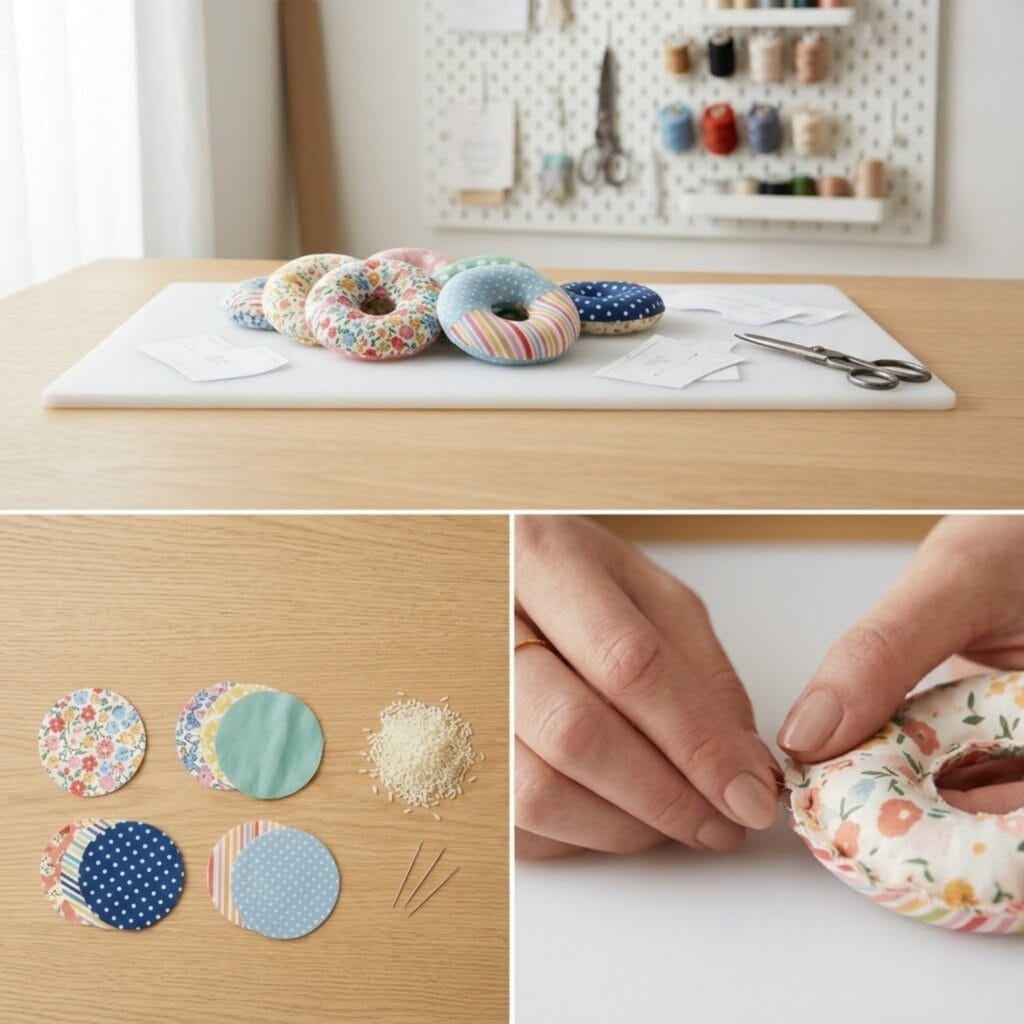
- Special Supplies: Bright cotton fabric leftovers, washed dry rice or small metal washers for weight, and a basic hand-sewing needle.
- How to Make It: First, cut two identical circles from your fabric and cut a smaller hole in the exact center of each. Next, place the right sides together and sew around the outer edge. Then, turn the fabric right side out. Carefully fold the raw edges of the inner center hole inward and hand-stitch them halfway closed. Afterward, fill the inside cavity tightly with dry rice. Finally, blind-stitch the remaining gap perfectly shut.
Pro-Tip: Interestingly, using a small paper funnel makes pouring the dry rice into the curved fabric tube much easier and prevents a messy workspace.
2. The Hexagon Pattern Needle Book
Supplies Needed: Assorted Quilting Cotton Fabric Scraps, English Paper Piecing Hexagon Templates, Wool Blend Felt Sheets, Satin Ribbon, Hand Sewing Needles, Heavy Duty Sewing Thread
Keeping track of loose hand-sewing needles is incredibly difficult. Consequently, a dedicated needle book is a must-have for any crafter. This design uses the classic English paper piecing method to create a stunning honeycomb cover. As a result, it ranks highly among beautiful easy fabric scrap projects.
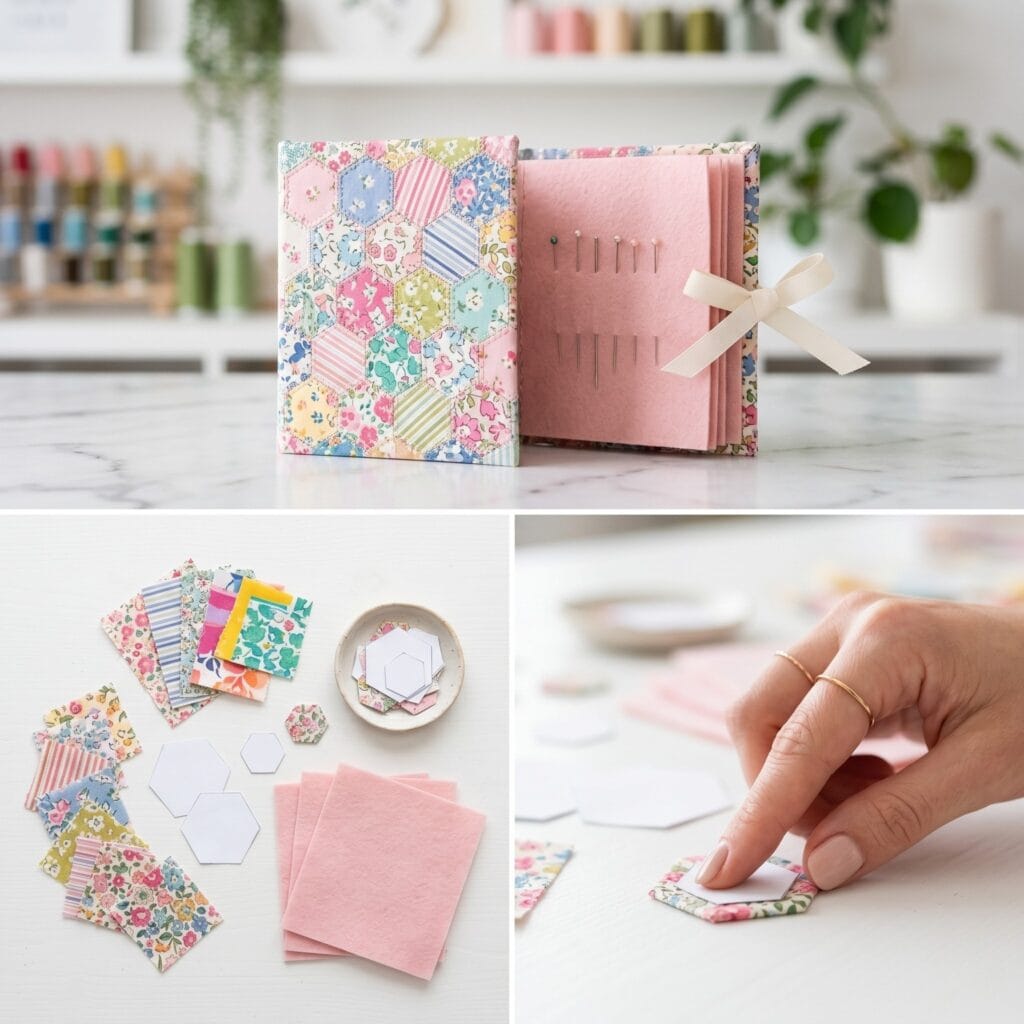
- Special Supplies: Tiny assorted fabric scraps, paper hexagon templates, soft wool felt for the interior pages, and a ribbon closure.
- How to Make It: First, wrap your tiny fabric pieces around the paper hexagon templates and baste them in place. Next, whipstitch the edges of the hexagons together to form a solid rectangular cover. Then, carefully remove the paper backings once the cover is secure. Afterward, cut your wool felt into rectangles slightly smaller than the cover. Finally, stack the felt pages inside the cover and sew a single straight line down the center spine to bind the book together.
Pro-Tip: Always use pure wool felt or high-quality wool blend felt for the interior pages. Synthetic craft felt can easily dull your sharp needles over time.
3. The Wrist Pin Cushion: A Classic Easy Fabric Scrap Project
Supplies Needed: Assorted Quilting Cotton Fabric Scraps, Polyester Fiberfill Stuffing, Wide Non-Roll Elastic, Hand Sewing Needles, Heavy Duty Sewing Thread, Sewing Pins
Reaching across the cutting table for your pins interrupts your workflow constantly. Specifically, a wrist pin cushion solves this problem by keeping your pins exactly where your hands are. It is undoubtedly one of the most practical easy fabric scrap projects you can try.
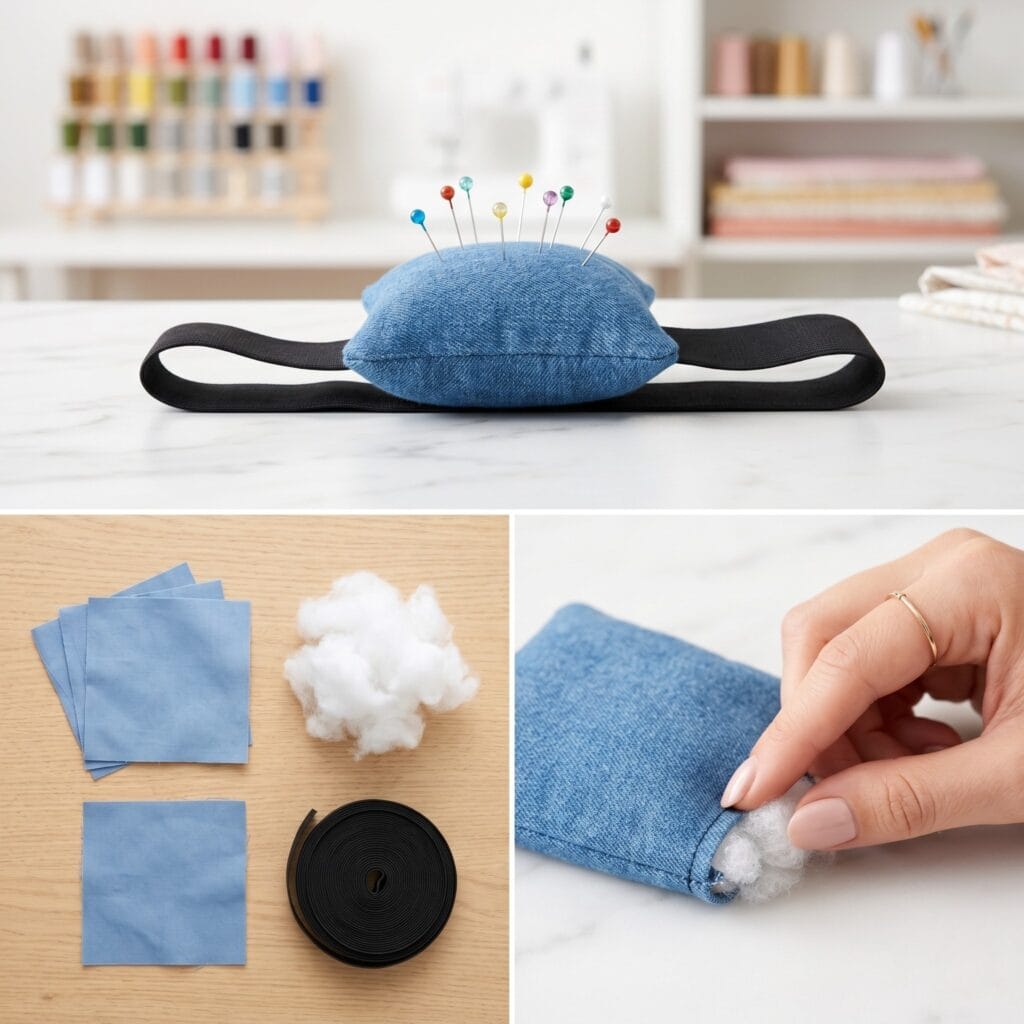
- Special Supplies: Soft cotton scraps, a wide elastic band, and premium polyester fiberfill stuffing.
- How to Make It: First, cut a fabric square for the top and a matching square for the bottom. Next, sew the right sides together, leaving a small opening. Subsequently, turn it right side out and stuff it firmly with the fiberfill. Then, sew the opening closed securely. Afterward, measure the elastic band to fit comfortably around your wrist. Finally, hand-stitch the ends of the elastic band directly to the bottom of the stuffed cushion.
Pro-Tip: To keep your pins extra sharp, add a small handful of steel wool into the very center of the cushion before adding the polyester stuffing.
4. The Fabric Scrap Pattern Scissors Pouch
Supplies Needed: Canvas Fabric, Fusible Fleece Interfacing, Metal Snap Fasteners, Fabric Scissors, Heavy Duty Sewing Thread, Steam Iron and Pressing Station
High-quality fabric shears are expensive investments that require proper protection. Dropping them or letting them scratch against other tools can ruin their precise calibration. Thus, a padded triangular pouch is the perfect protective home for your scissors. Moreover, creating one is a staple among easy fabric scrap projects.
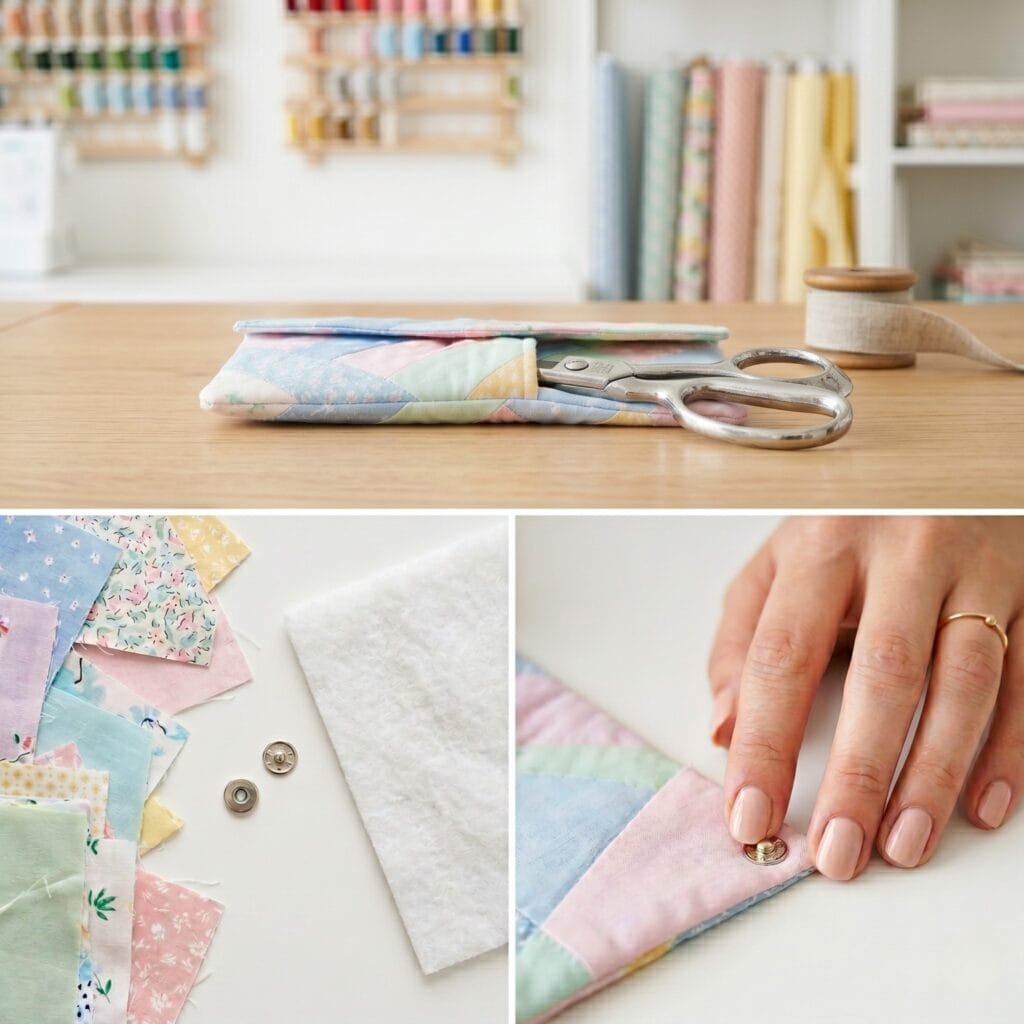
- Special Supplies: Canvas or thick cotton scraps, fusible fleece interfacing, and a single metal snap closure.
- How to Make It: Initially, iron the fusible fleece to the back of your main exterior fabric to provide protective padding. Next, cut the padded fabric and a matching lining piece into a tall asymmetrical triangle shape. Then, place the right sides together and sew the edges, leaving a turning gap. Afterward, turn the pouch right side out, press it flat, and topstitch the perimeter. Finally, fold the bottom point upward to create the pocket, sew the sides securely, and attach a snap to the top folding flap.
Pro-Tip: Measure your specific fabric shears before cutting your fabric template. Heavy-duty tailor shears will require a significantly wider pouch base than standard craft scissors.
5. Cord Keepers for Easy Fabric Scrap Projects
Supplies Needed: Assorted Quilting Cotton Fabric Scraps, Cotton Clothesline Cord, Metal Snap Fasteners, Hand Sewing Needles, Heavy Duty Sewing Thread
Sewing machines, irons, and sergers create a tangled mess of cables on any crafting table. Additionally, loose measuring tapes tend to unroll and cause clutter. These minimalist cord keepers wrap around your items to maintain ultimate tidiness. Therefore, they are essential easy fabric scrap projects for organization.
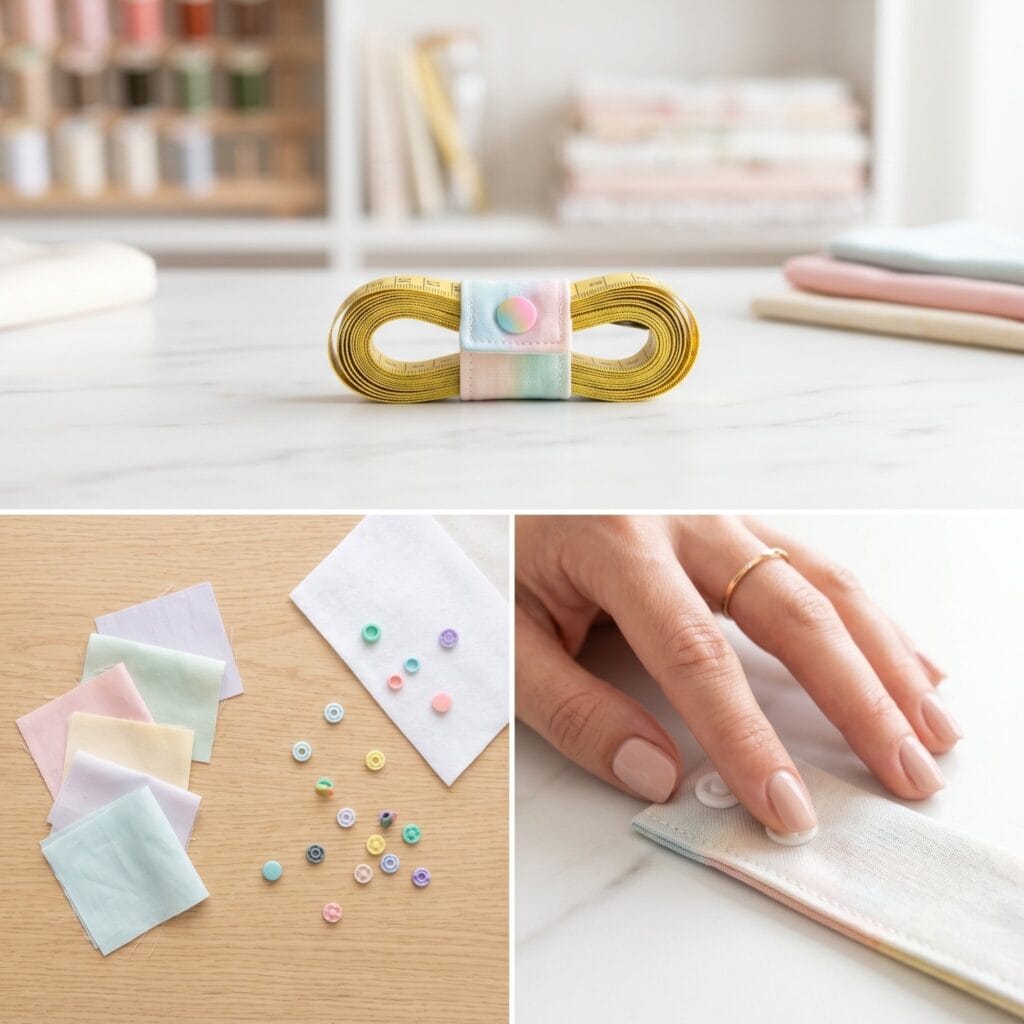
- Special Supplies: Stiff rectangular fabric leftovers, medium-weight interfacing, and plastic kam snaps.
- How to Make It: First, apply the interfacing to one rectangular fabric piece for stiffness. Next, place a second fabric piece on top with the right sides facing each other. Then, sew around the four edges, leaving a tiny gap. Afterward, turn the rectangle right side out and push the corners out sharply. Subsequently, topstitch around the entire edge to close the gap. Finally, install one side of the plastic snap on the left end and the matching side on the far right end.
Pro-Tip: You can color-code your cord keepers. For instance, use blue scraps for sewing machine cables and red scraps for hot tools like irons.
6. The Quilted Sewing Machine Mat
Supplies Needed: Assorted Quilting Cotton Fabric Scraps, Quilt Batting, Non-Slip Shelf Liner, Heavy Duty Sewing Thread, Rotary Cutter and Quilting Ruler Set, Computerized Sewing Machine
Heavy sewing machines can easily vibrate, scratch wooden tables, and generate annoying noise. Placing a padded mat beneath your machine instantly dampens the sound. Furthermore, adding front pockets gives you immediate access to your most used notions. This mat is one of the most functional easy fabric scrap projects.
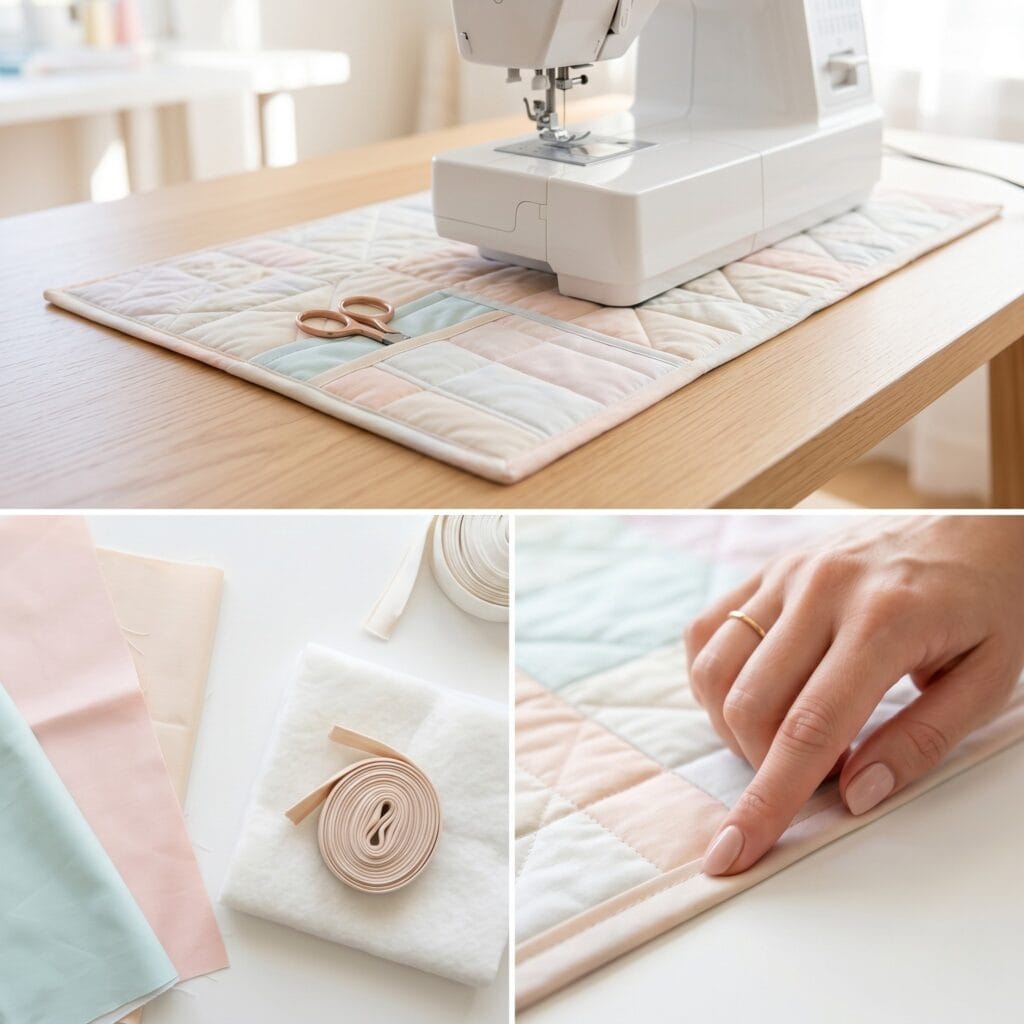
- Special Supplies: Large fabric offcuts, quilt batting, and bias tape for the edges.
- How to Make It: First, layer your main fabric, the quilt batting, and a backing fabric to create a sandwich. Next, quilt straight diagonal lines across the entire piece to secure the layers together. Then, take a smaller rectangular piece of fabric, fold the top edge down, and sew it to the bottom front of your quilted mat to create a long pocket. Afterward, sew vertical dividing lines across this pocket. Finally, wrap and sew bias tape around the entire outer edge of the mat to finish the raw edges cleanly.
Pro-Tip: Attach small pieces of non-slip rubber shelf liner to the bottom of the mat. This entirely prevents your sewing machine from sliding backward while you work.
7. The Tailor’s Ham: The Ultimate Easy Fabric Scrap Project
Supplies Needed: Cotton Twill Fabric, Hardwood Sawdust, Hand Sewing Needles, Heavy Duty Sewing Thread, Steam Iron and Pressing Station
Pressing curved garment seams properly is impossible on a flat ironing board. A tailor’s ham is a firm, curved cushion designed specifically for pressing darts, collars, and sleeves. Because it requires heavy stuffing, it is the absolute best way to utilize hundreds of tiny, unsewable fabric shreds. Indeed, it perfectly represents zero-waste easy fabric scrap projects.
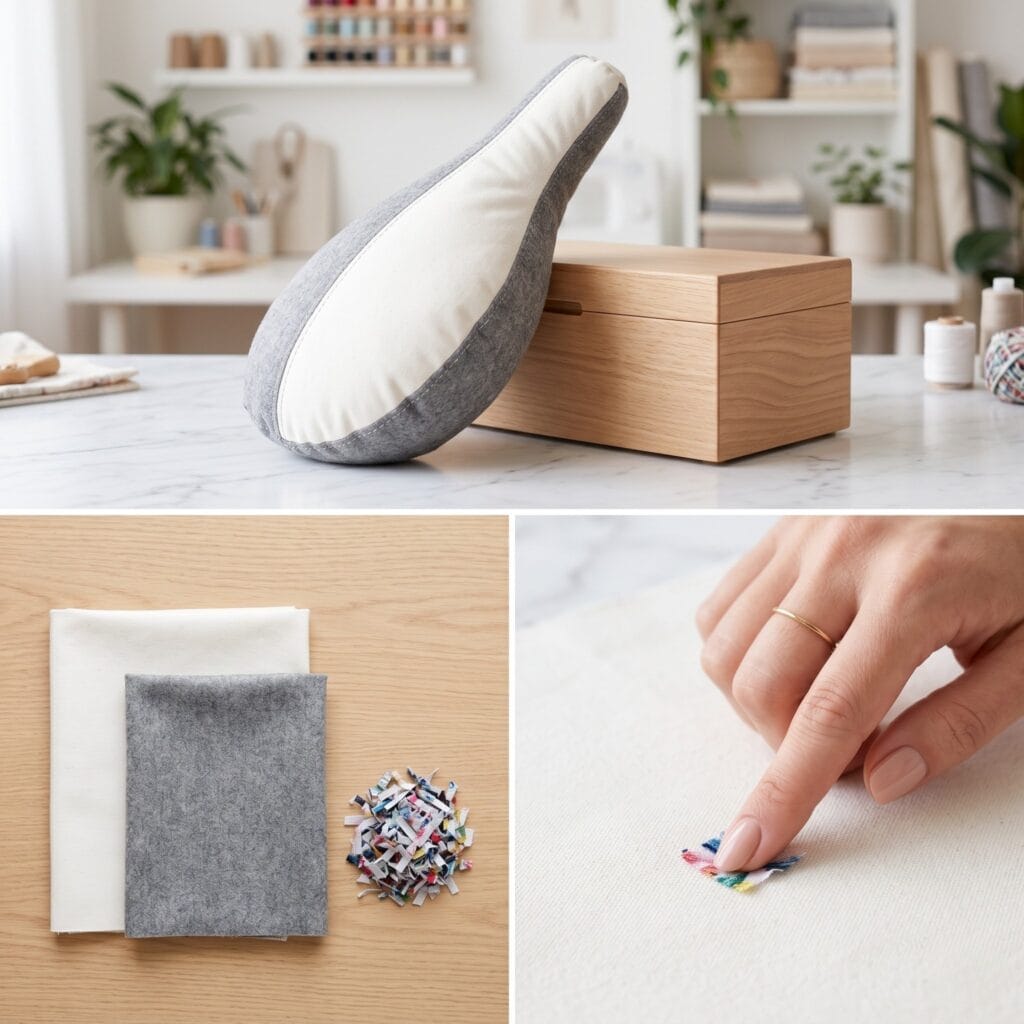
- Special Supplies: One piece of thick cotton canvas, one piece of wool fabric, and a massive amount of tiny shredded fabric scraps.
- How to Make It: First, cut an oval shape from the canvas and an identical oval from the wool fabric. Next, place the right sides together and sew around the curve, leaving a two-inch gap. Then, turn the oval right side out. Now, begin stuffing the shape with your tiniest fabric scraps. Importantly, you must pack the scraps incredibly tight until the cushion is rock hard. Use a strong needle to hand-stitch the opening shut.
Pro-Tip: The dual-fabric design is intentional. Use the cotton canvas side when pressing fabrics at high heat, and flip to the wool side when pressing delicate garments that require lower temperatures.
8. The Patterned Bobbin Organizer Pouch
Supplies Needed: Assorted Quilting Cotton Fabric Scraps, Clear Vinyl Sheeting, Fusible Fleece Interfacing, Nylon Coil Zippers, Heavy Duty Sewing Thread, Seam Ripper
Keeping bobbins from unwinding and tangling into a giant knot is a universal struggle. A dedicated zipper pouch with a transparent window helps you find the exact thread color you need instantly. For this reason, adding this to your list of easy fabric scrap projects is highly recommended.
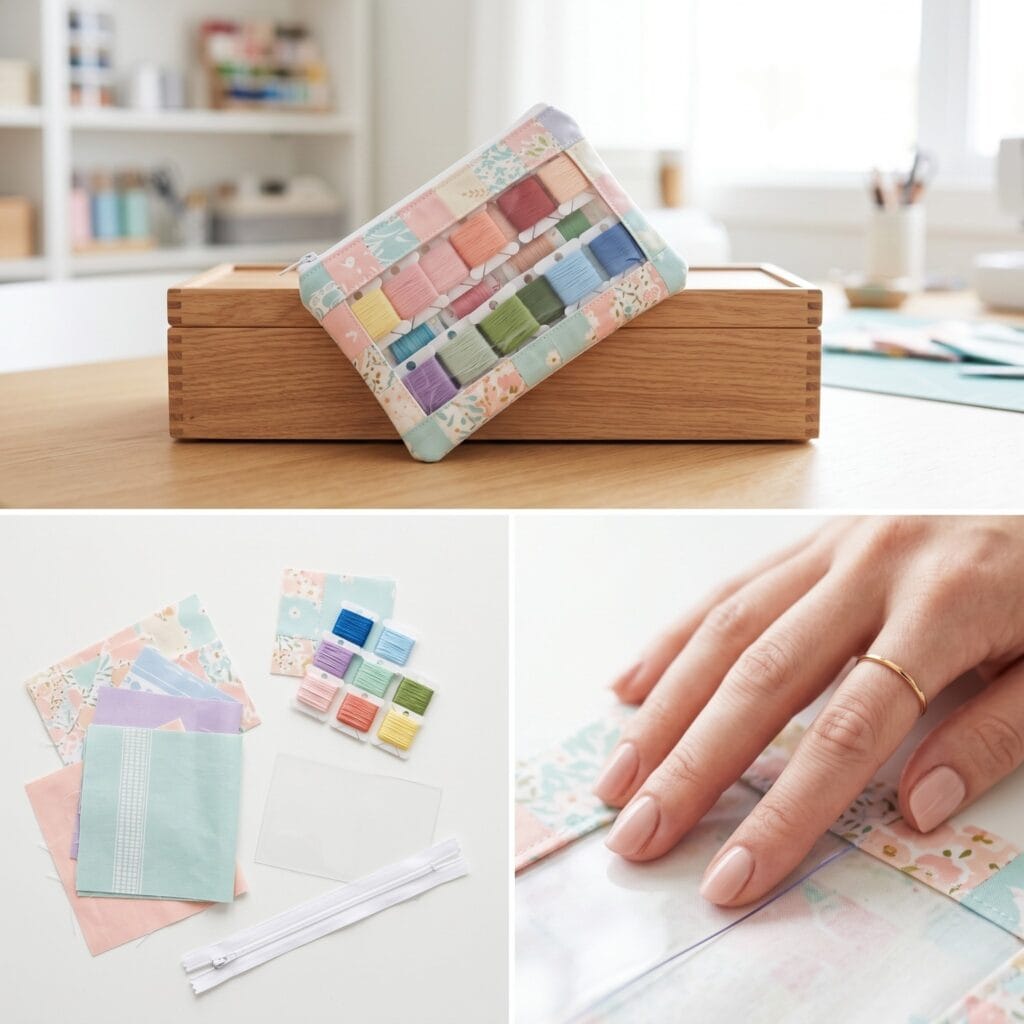
If you enjoy making functional zippered pouches like this one, you should also try sewing our easy DIY reusable snack bags for a zero-waste kitchen.
- Special Supplies: Sturdy cotton scraps, a piece of clear vinyl, and a nylon zipper.
- How to Make It: First, cut a rectangular frame out of your cotton fabric. Next, sew the clear vinyl directly behind the cutout window to create a transparent front panel. Then, attach the nylon zipper to the top edge of this front panel. Sew a solid fabric rectangle to the other side of the zipper for the back panel. Open the zipper halfway, place the front and back right sides together, and sew around the remaining three sides before turning the pouch right side out.
Pro-Tip: Place a small piece of tissue paper over the clear vinyl while sewing it to the fabric. This prevents the sticky plastic from jamming under your presser foot.
9. The Recycled Jar Pincushion: Beautiful Easy Fabric Scrap Projects
Supplies Needed: Assorted Quilting Cotton Fabric Scraps, Polyester Fiberfill Stuffing, Strong Fabric Glue, Sewing Pins, Heavy Duty Sewing Thread
Storing tiny sewing notions like spare buttons, snap fasteners, or safety pins can be quite challenging. Any standard empty glass jar from your kitchen is perfect for visibility, but transforming its basic metal lid into a padded pincushion creates the ultimate dual-purpose storage solution. You get a secure container and a handy place to rest your pins simultaneously. It is an incredibly clever, budget-friendly addition to your easy fabric scrap projects.
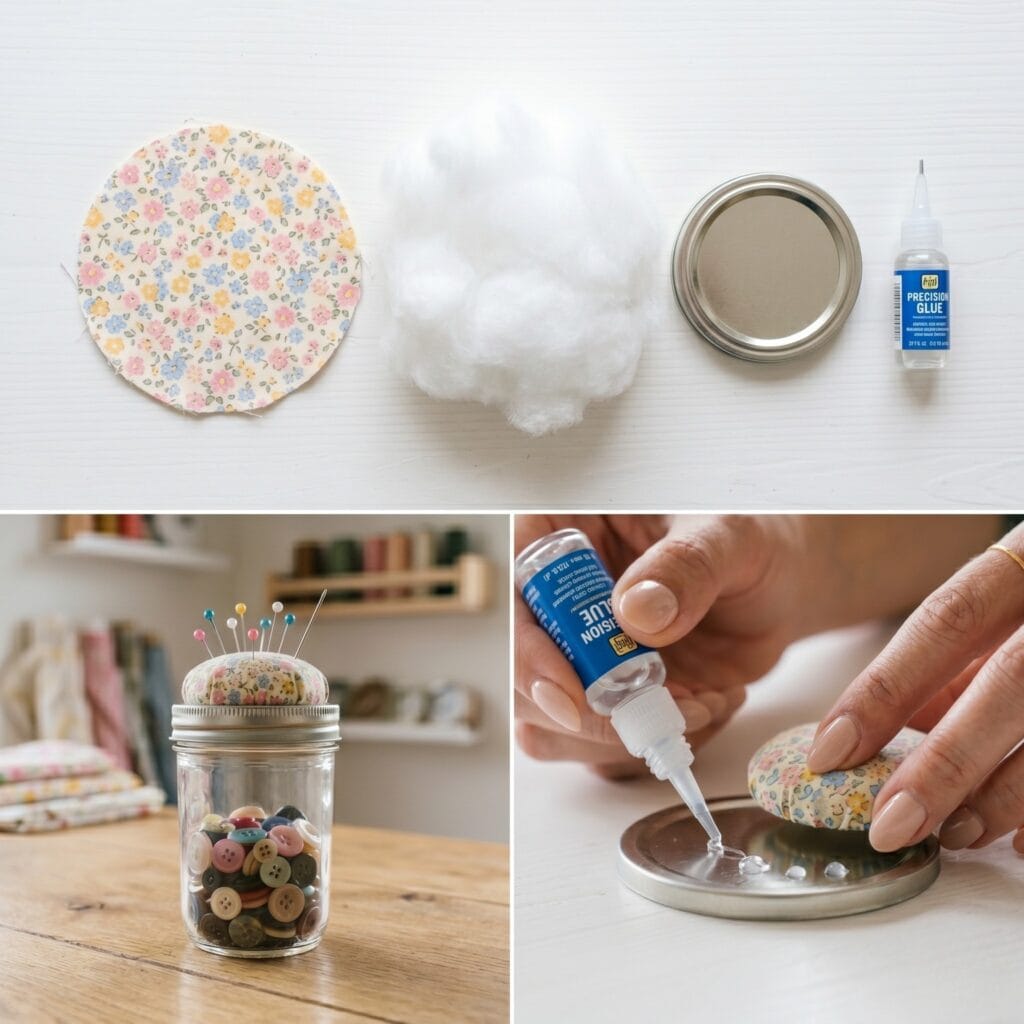
If you need even more stylish storage solutions, check out our favorite upcycled glass jar crafts.
- Special Supplies: Small cotton fabric leftovers, any standard clean glass jar with a one-piece metal lid (like an empty jam jar), a handful of polyester stuffing, and strong craft glue.
- How to Make It: First, cut a circle of fabric and sew a simple running stitch around the outer edge. Next, place a small mound of stuffing in the center and pull the thread tight to create a little padded fabric puff. Then, tie off the thread securely. Apply a generous amount of strong craft glue directly to the top of your standard metal jar lid. Press the flat bottom of your stuffed fabric puff firmly onto the glued lid and let it dry completely before screwing it onto your jar.
Pro-Tip: To give your project a seamless, professional finish, use a drop of glue to wrap a thin scrap of ribbon or jute twine around the outer edge of the metal lid. This beautifully hides the transition line between the fabric puff and the metal.
10. The Fabric Scrap Spool Huggers
Supplies Needed: Assorted Quilting Cotton Fabric Scraps, Wool Blend Felt Sheets, Hook and Loop Tape, Hand Sewing Needles, Heavy Duty Sewing Thread
Loose thread tails constantly unwind, creating a tangled and frustrating mess inside your storage box. Spool huggers are tiny fabric bands that wrap snugly around your spools to keep the thread locked firmly in place. Adding this to your list of easy fabric scrap projects will instantly clean up your thread collection.
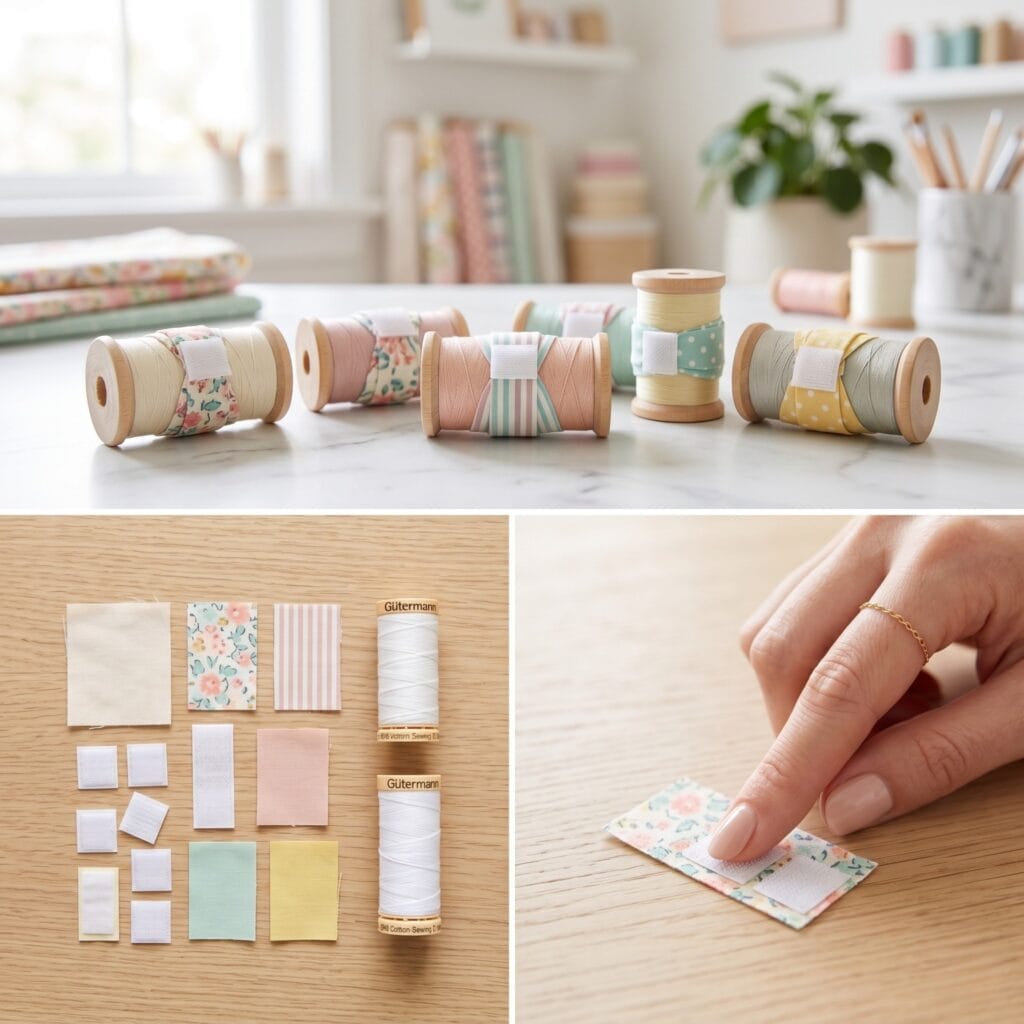
- Special Supplies: Tiny rectangular fabric scraps, lightweight interfacing, and small pieces of sew-on hook and loop tape (Velcro).
- How to Make It: First, cut two tiny rectangles of fabric and one matching piece of interfacing. Next, sew the right sides together, leaving a turning gap, and turn it right side out. Then, topstitch the perimeter flat. Sew a small square of the hook tape to one end and the loop tape to the opposite end. Finally, wrap the fabric hugger tightly around a thread spool and press the fastener shut.
Pro-Tip: Measure your most commonly used thread spools before cutting. You will need slightly longer fabric strips for bulky serger cones compared to standard home sewing machine spools.
✨ Consumable Raw Materials
- Assorted Quilting Cotton Fabric Scraps | Check Price on Amazon
- Natural White Rice | See Price on Amazon
- Steel Metal Washers | Check Steel Metal Washers on Amazon
- English Paper Piecing Hexagon Templates | See English Paper Piecing Hexagon Templates on Amazon
- Wool Blend Felt Sheets | View Wool Blend Felt Sheets on Amazon
- Satin Ribbon | Find Satin Ribbon on Amazon
- Polyester Fiberfill Stuffing | Check Latest Price on Amazon
- Wide Non-Roll Elastic | View on Amazon
- Canvas Fabric | Check Price on Amazon
- Fusible Fleece Interfacing | See Price on Amazon
- Quilt Batting | Check Quilt Batting on Amazon
- Non-Slip Shelf Liner | See Non-Slip Shelf Liner on Amazon
- Cotton Twill Fabric | View Cotton Twill Fabric on Amazon
- Hardwood Sawdust | Find Hardwood Sawdust on Amazon
- Clear Vinyl Sheeting | Check Latest Price on Amazon
- Cotton Clothesline Cord | View on Amazon
🧰 Core Crafting Tools & Equipment
- Hand Sewing Needles | Check Price on Amazon
- Fabric Scissors | See Price on Amazon
- Rotary Cutter and Quilting Ruler Set | Check Rotary Cutter and Quilting Ruler Set on Amazon
- Seam Ripper | See Seam Ripper on Amazon
💎 Hardware, Fasteners & Finishing
- Sewing Pins | View Sewing Pins on Amazon
- Heavy Duty Sewing Thread | Find Heavy Duty Sewing Thread on Amazon
- Metal Snap Fasteners | Check Latest Price on Amazon
- Nylon Coil Zippers | View on Amazon
- Hook and Loop Tape | Check Price on Amazon
- Strong Fabric Glue | See Price on Amazon
⚡ Studio Tools & Workshop Equipment
- Self-Healing Cutting Mat | Check Self-Healing Cutting Mat on Amazon
- Computerized Sewing Machine | See Computerized Sewing Machine on Amazon
- Steam Iron and Pressing Station | View Steam Iron and Pressing Station on Amazon
Quick Reference: All Supplies at a Glance
For your convenience, here is a quick summary of all materials and tools used in this tutorial:
✨ Consumable Raw Materials
- Assorted Quilting Cotton Fabric Scraps | Check Price on Amazon
- Natural White Rice | See Price on Amazon
- Steel Flat Washers | Check Steel Flat Washers on Amazon
- Wool Blend Felt Sheets | See Wool Blend Felt Sheets on Amazon
- Narrow Satin Ribbon | View Narrow Satin Ribbon on Amazon
- Polyester Fiberfill Stuffing | Find Polyester Fiberfill Stuffing on Amazon
- Wide Non-Roll Elastic | Check Latest Price on Amazon
- Cotton Canvas Fabric | View on Amazon
- Fusible Fleece Interfacing | Check Price on Amazon
- Low-Loft Quilt Batting | See Price on Amazon
- Clear Vinyl Sheet | Check Clear Vinyl Sheet on Amazon
- Cotton Twill Tape | See Cotton Twill Tape on Amazon
- Polyester All-Purpose Sewing Thread | View Polyester All-Purpose Sewing Thread on Amazon
🧰 Core Crafting Tools & Equipment
- English Paper Piecing Hexagon Templates | Find English Paper Piecing Hexagon Templates on Amazon
- Rotary Cutter and Self-Healing Cutting Mat Set | Check Latest Price on Amazon
- Clear Acrylic Quilting Ruler | View on Amazon
- Fabric Shears | Check Price on Amazon
- Hand Sewing Needles Assortment | See Price on Amazon
- Glass Head Sewing Pins | Check Glass Head Sewing Pins on Amazon
- Seam Ripper | See Seam Ripper on Amazon
💎 Hardware, Fasteners & Finishing
- Iron-On Fusible Web | View Iron-On Fusible Web on Amazon
- Sew-On Hook and Loop Tape | Find Sew-On Hook and Loop Tape on Amazon
- Nylon Coil Zippers | Check Latest Price on Amazon
- Sew-On Snap Fasteners | View on Amazon
- Non-Slip Shelf Liner | Check Price on Amazon
- Wide-Mouth Mason Jars | See Price on Amazon
⚡ Studio Tools & Workshop Equipment
- Heavy-Duty Sewing Machine | Check Heavy-Duty Sewing Machine on Amazon
- Steam Iron with Precision Tip | See Steam Iron with Precision Tip on Amazon
- Daylight LED Magnifying Desk Lamp | View Daylight LED Magnifying Desk Lamp on Amazon
Important Crafting Safety Notes
Crafting is a rewarding creative activity, but maintaining a safe workshop environment is essential for yourself, your family, and your pets. Please review these vital safety precautions before starting:
• Personal Protective Equipment (PPE) & Safe Handling: Always wear safety glasses or protective eyewear when cutting metal wire, clipping jump rings, trimming hard findings, or using power tools to prevent flying shards. Use heat-resistant work mats and exercise caution around high-temperature glue guns, irons, or heating tools to avoid burns. Wear disposable nitrile gloves and a particle dust mask when sanding wood or working with clays, resins, and solvent-based sealants to protect your skin and lungs.
• Room Ventilation & Fume Safety: Always craft in a well-ventilated space with open windows, cross-ventilation, or active exhaust whenever using solvent-based adhesives, instant bonders, aerosol sprays, epoxy resins, or heat-curing materials. Never inhale chemical fumes directly, and allow finished pieces to off-gas and cure completely in an airy area away from everyday living spaces.
• Child & Pet Safety (Choking & Swallowing Prevention): Small craft components—including safety eyes, split rings, clasps, jump rings, beads, bells, small magnets, unbaked clay scraps, and loose polyester fiberfill—present severe choking, intestinal obstruction, and ingestion hazards for babies, toddlers, and pets. Keep all unattached hardware, yarn cutoffs, and stuffing strictly out of reach. For handmade gifts intended for infants or young children, omit plastic washer eyes and detachable findings entirely in favor of securely stitched, double-knotted embroidered details.
• Sharp Tool Storage & Clean Work Area: Store sharp tools—such as rotary cutters, craft knives, bent-tip yarn needles, snips, scissors, and jewelry pliers—in secure, latching cases or high cabinets immediately after use. Thoroughly inspect, sweep, or vacuum your craft area and floor after finishing to ensure no dropped needles, pins, wire clippings, or small findings remain where curious pets or bare feet could step on or swallow them.
• Certified, Quality & Non-Toxic Supplies: Always choose verified non-toxic craft supplies (such as ACMI AP-certified paints and adhesives, lead-free and nickel-free jewelry findings, and skin-safe materials). Follow manufacturer label guidelines for curing durations, safe operating temperatures, and proper product disposal. Never use food preparation utensils or kitchen cookware for craft chemicals.
For more detailed guidance on safe crafting practices, liability disclosures, and website usage, please review our Terms and Conditions.
“Which of these Fabric Scrap Projects You Will Love ideas are you excited to try first, or do you have a creative tip of your own to share? Drop a comment below—I’d love to hear your thoughts and see what you create!”